
PetSmart Puppy Classes: Prices & Schedule
PetSmart’s Puppy Training class costs $149 for six weekly one-hour sessions, for puppies from 10 weeks to 5 months old. It teaches basic skills, communication and socialization, including leash manners and help with nipping and barking.
Class days and times vary by store, and each class meets at the same time every week. Here’s what your puppy needs before the first session, what the class covers and how to get the most from it.
Puppy Class Price and Schedule
| Detail | Puppy Training |
|---|---|
| Price | $149 |
| Length | 6 weeks, one 1-hour class per week |
| Ages | 10 weeks to 5 months |
| Class size | Typically 4 to 6 dogs |
| Schedule | Set day and time each week, varies by store |
Through November 1, 2026, PetSmart listed $20 off a 6-week class. Choose your store on PetSmart’s training page to see local dates and any discount.
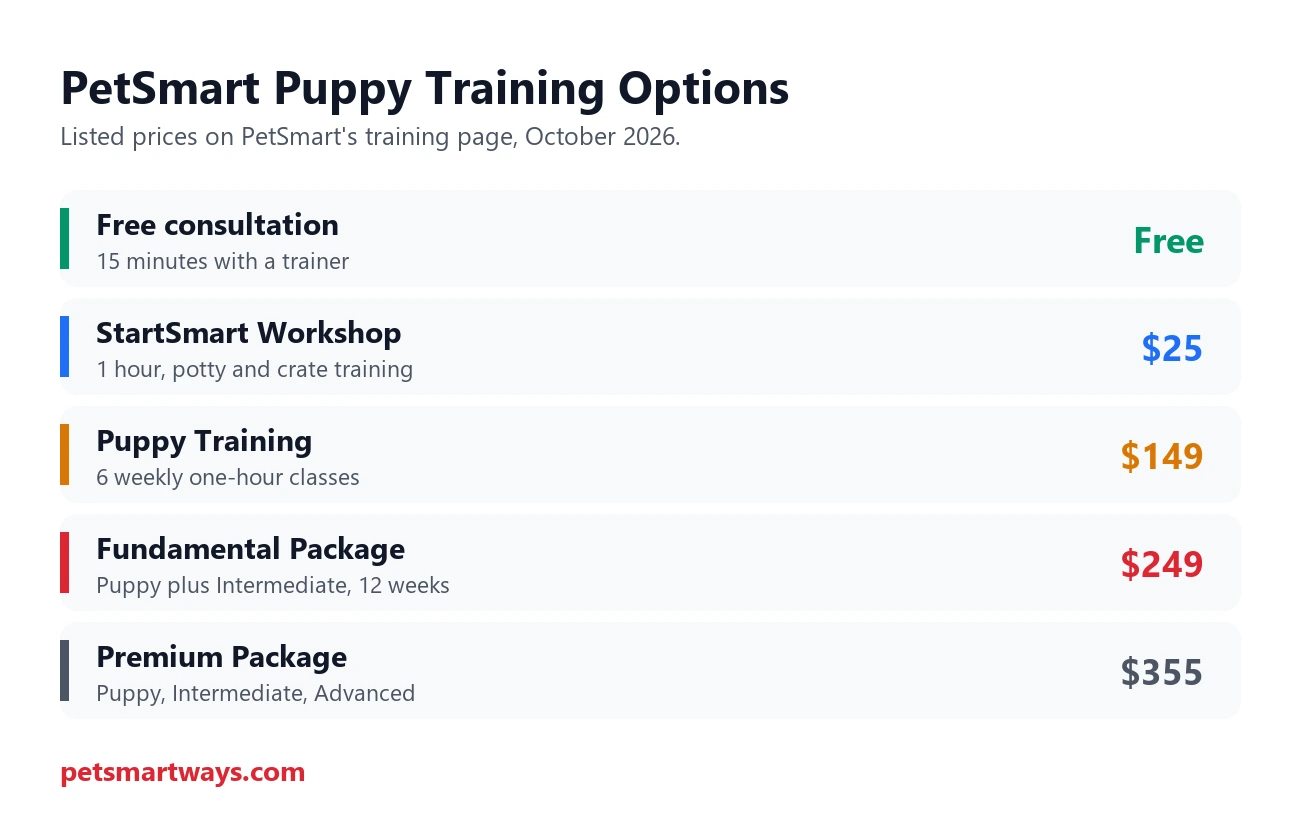
If you’ll continue past puppy class, the Fundamental Package adds Intermediate for $249 total. Our PetSmart dog training prices guide lists every class and package.
When Your Puppy Can Start

Puppies can join at 10 weeks old. Starting early matters because puppies are most open to new people, dogs and places before about 14 to 16 weeks.
The American Veterinary Society of Animal Behavior supports starting puppy classes before the vaccine series is complete, as long as puppies have had their first shots. Well-run classes keep the health risk low while the social benefits are large.
Enrolling at 10 or 11 weeks gets the most out of that window. Sit and stay can be taught at any age, but early socialization can’t be made up later.
Vaccines Your Puppy Needs
PetSmart requires DPP with adenovirus, which covers distemper, parvovirus and parainfluenza. Rabies is required once your puppy is old enough.
Shots must be given at least 48 hours before a class, and you need written proof before or at the first session. Some areas add local requirements, so check with your store.
If your puppy is behind, the low-cost PetSmart vaccination clinics can help you catch up before the class starts.
What the Puppy Class Teaches
PetSmart describes the class as an introduction to basic skills, communication and socialization. Trainers use positive reinforcement throughout.
- Responding to their name and paying attention to you
- Basic cues like sit, down and come
- Leash manners for calmer walks
- Tips for puppy nipping and barking
- Gentle handling of paws, ears and mouth
- Calm time around other puppies and people
Handling practice pays off for life. A puppy that’s used to having its paws touched is much easier at nail trims and vet visits.
Picking a Class Time
Choose a day and time you can keep for all six weeks, since classes meet at the same slot each week. Missing sessions slows your puppy’s progress.
Evening classes fit work schedules but can be busier in the store. Weekend classes fill fastest, so book those early.
Getting Your Puppy Ready for the Store
A busy PetSmart is full of new smells, sounds and animals. Visit the store once or twice before class so your puppy isn’t overwhelmed on day one.
Carry a puppy that isn’t fully vaccinated, or use a cart with a towel. Our guide to bringing your dog inside PetSmart covers the store rules.
What to Bring

Bring plenty of small, soft treats, since puppies go through them quickly. Feed a lighter meal beforehand so your puppy is keen to work for food.
Skip retractable leashes and choke or prong collars, which PetSmart doesn’t allow in class.
Before the First Class
Every dog gets a hands-on assessment at check-in from a safety-certified associate. Tell staff about any health issues or worries.
Take your puppy to potty outside before you walk in. A short play session at home first can help an excitable puppy settle.
If you’re unsure the class is a good fit, book PetSmart’s free 15-minute consultation with a trainer first.
Puppy Class or Beginner Class?
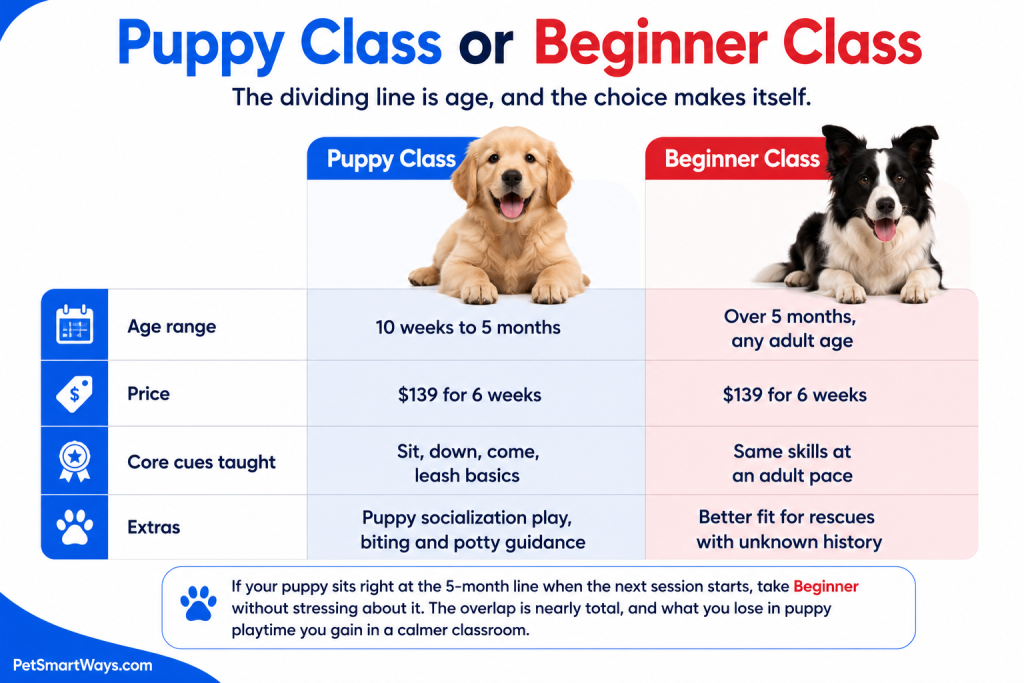
| Puppy Training | Beginner Training | |
|---|---|---|
| Ages | 10 weeks to 5 months | 5 months and up |
| Price | $149 | $149 |
| Skills | Leash manners, nipping and barking tips | Leash manners, leave it, common problems |
| Best for | Young puppies and socialization | Older puppies and adopted adults |
If your puppy is right at 5 months when a session starts, Beginner is a fine choice. Most of the skills overlap.
Adopted an older puppy? Our PetSmart adoption guide covers the adoption process, and Beginner is the natural next step.
The StartSmart Workshop
PetSmart’s $25 StartSmart Training Workshop is a one-hour intro for new owners. It covers potty training, crate training, socialization and tips for vet and groomer visits.
It’s useful in the first weeks home, before your puppy is old enough for class. It also helps you decide which class to book.
Socialization Outside Class
Class is one hour a week, but socialization should happen every day. Aim for short, positive meetings with new people, sounds and surfaces.
- People of different ages, including children and people in hats
- Sounds like traffic, vacuums and doorbells
- Surfaces like grass, tile, metal and stairs
- Car rides and short visits to pet-friendly stores
- Gentle handling, like a pretend vet exam at home
Keep each experience short and pair it with treats. If your puppy seems scared, back off and try again more gently later.
Potty and Crate Training Basics
Take your puppy outside after waking, eating, playing and before bed. Praise and reward right after it goes in the right spot.
A crate gives your puppy a safe den and helps with potty training. Keep crate time short at first and never use it as punishment.
Accidents are normal for months. Clean them with an enzyme cleaner so the smell doesn’t draw your puppy back.
Practicing at Home
One class a week works best with a few minutes of practice every day. Short sessions of 3 to 5 minutes suit a puppy’s attention span.
- Practice the week’s cues in different rooms
- Reward calm behavior, not just commands
- Give chew toys to redirect nipping
- Take your puppy outside often to build potty habits
- Invite friendly visitors to meet your puppy
Write down questions during the week and bring them to class. Trainers expect them and can tailor advice to your puppy.
If You Miss a Class
Work with your trainer to schedule a make-up session. Lessons build each week, so catching up is better than skipping ahead.
PetSmart’s Training Guarantee
If you’re not satisfied, PetSmart lets you retake the class within 90 days. Prorated refunds are available until the second session starts.
Group Class or Private Sessions?
Group classes give socialization that private lessons can’t. For most puppies, the group class is the better first choice.
Private training starts at $45 for a 30-minute consultation or $89 for an hour. It suits shy puppies or owners whose schedules can’t fit a weekly class.
Starting Puppy Grooming Early
PetSmart salons offer puppy and kitten packages at 30% off adult prices through 5 months. A short bath and nail trim is a gentle first visit.
Pair it with the handling practice from class. Our grooming prices guide lists the puppy rates.
After Puppy Class
Intermediate Training is the next step and builds skills like heel, stay and place for real-world situations. It costs $149, or less as part of a package.
Well-socialized puppies often enjoy Doggie Day Camp too, which offers play and exercise once your dog meets the age and vaccine rules.
What a Group Class Can’t Fix
A puppy class handles normal puppy behavior like nipping, jumping and pulling. It isn’t the right fit for real aggression, guarding food or toys, or severe fear.
Those problems need a veterinary behaviorist or a certified behavior consultant. PetSmart may also suggest private sessions after its assessment.
Puppy Class Questions
How much are PetSmart puppy classes?
Puppy Training costs $149 for six weekly one-hour classes. Packages start at $249.
How old does my puppy need to be?
At least 10 weeks old, and no older than 5 months for the puppy class.
What shots does my puppy need for class?
DPP with adenovirus, plus rabies when age appropriate, given at least 48 hours before class.
How many puppies are in a class?
PetSmart says to expect about 4 to 6 dogs.
What if my puppy is shy or scared in class?
Tell the trainer, who can give your puppy more space or suggest a private session. Many shy puppies relax after a week or two.
Do I need to book in advance?
Yes, classes have limited spots. Book online or at your store before the start date.
Can my whole family come to class?
Ask your store about space. Having everyone learn the same cues helps your puppy learn faster.