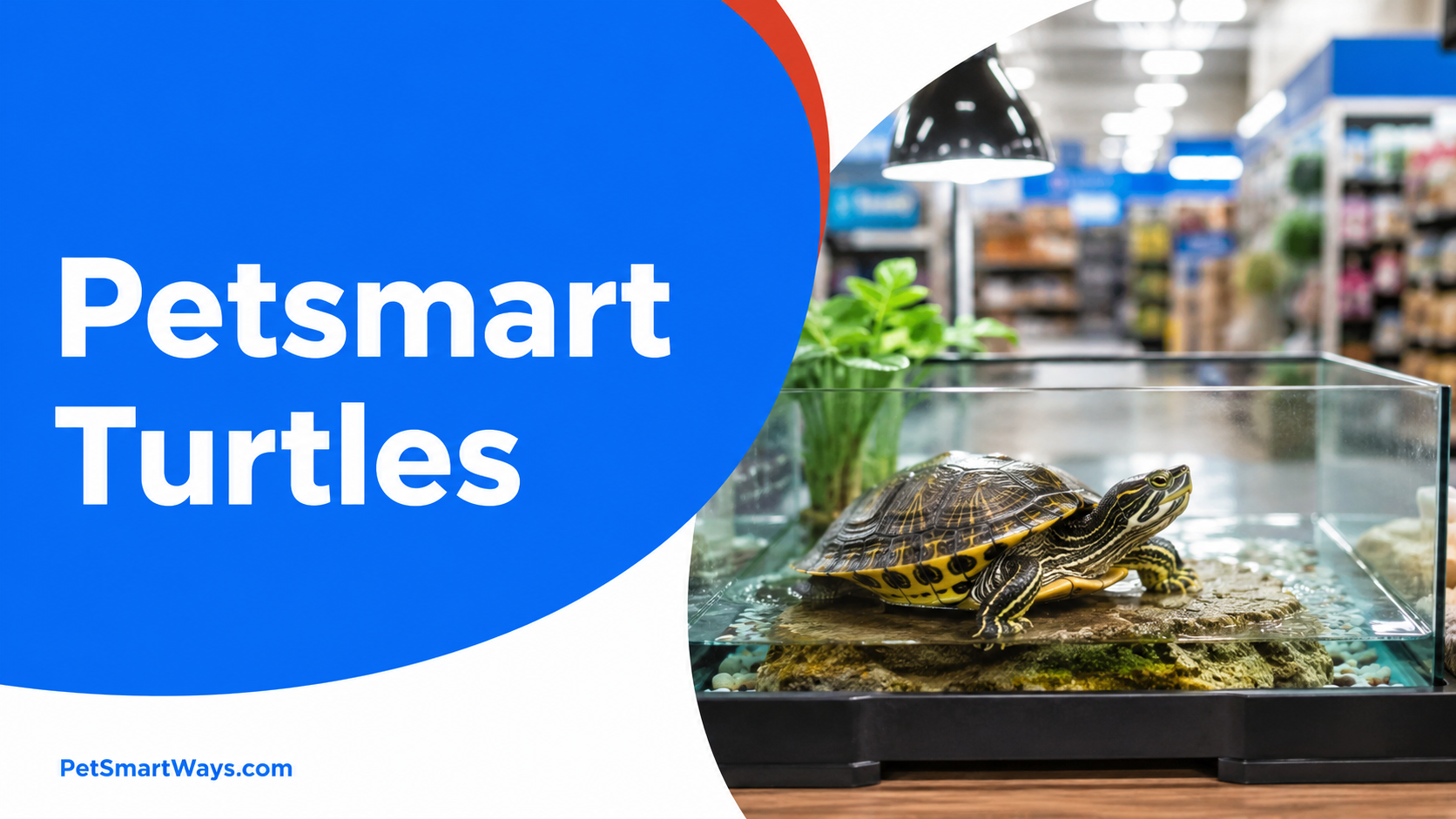
PetSmart Turtles: Do They Still Sell Them?
No, PetSmart doesn’t currently sell live turtles or tortoises. Its online reptile section, still named Snakes, Turtles & More, lists 28 animals and none of them are turtles.
PetSmart still sells nearly everything you need to keep one, from tanks and filters to UVB lights and turtle food. So you’ll need to find the turtle elsewhere and buy the gear at PetSmart.
| Question | Answer |
|---|---|
| Does PetSmart sell turtles? | Not in its current online listings |
| Does it sell turtle supplies? | Yes, food, tanks, lighting and more |
| Where to get a turtle | Reptile rescues, licensed breeders or reptile expos |
| Typical setup cost | About $260 to $625 for an aquatic turtle |
What PetSmart Sells Instead
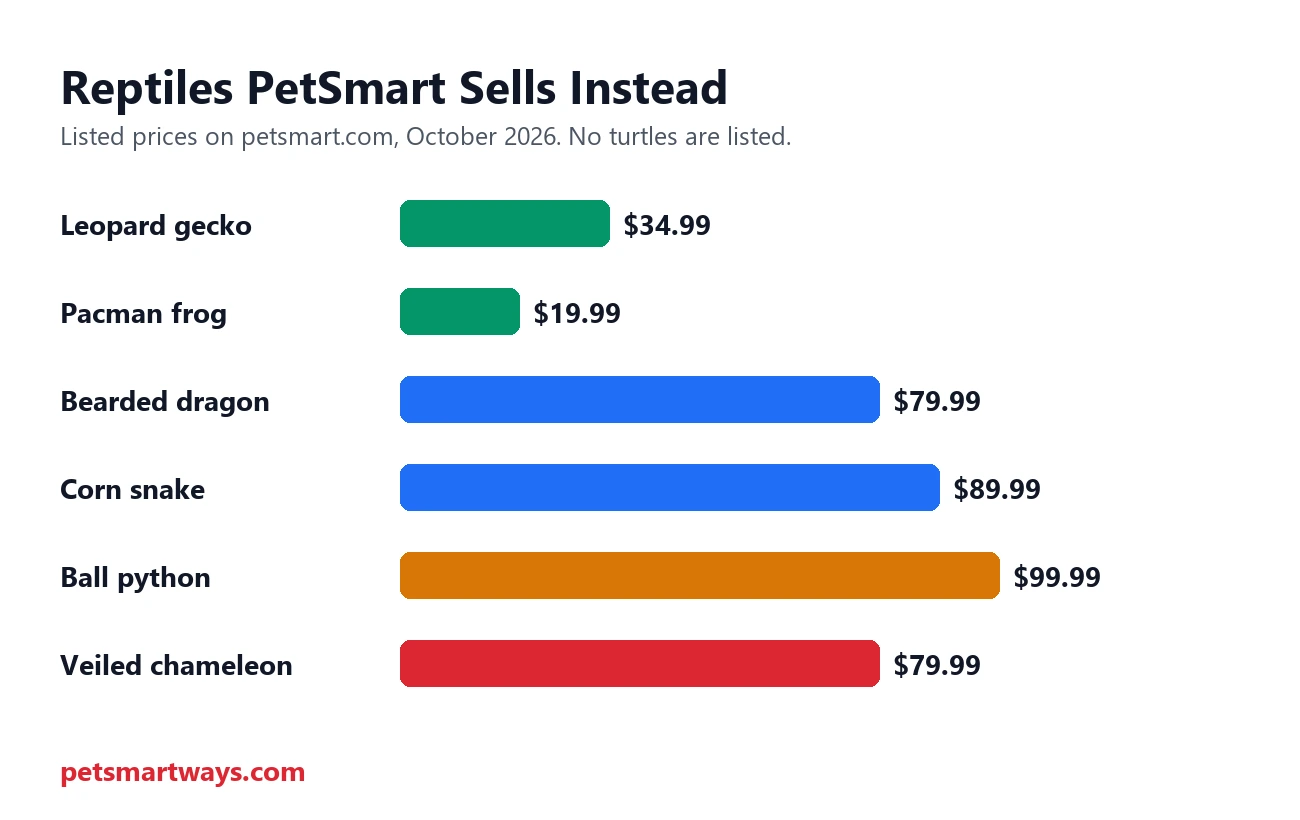
We checked PetSmart’s live reptile listings in October 2026. They include lizards, snakes, frogs and invertebrates, but no turtles or tortoises.
PetSmart hasn’t published a reason for not selling turtles. Availability can also vary by store, so call your local PetSmart if you want to be sure.
If you want a reptile from PetSmart, our reptile guide and bearded dragon guide cover the options.
The Four-Inch Rule
Since 1975, federal rules have banned the sale of turtles with shells under four inches long in the US. The rule exists because small turtles spread salmonella to young children, who often handle them and put them near their mouths.
The ban doesn’t cover larger turtles, and some exemptions apply, such as for educational use. It’s why you won’t see tiny hatchlings sold as pets at reputable shops.
Any turtle can carry salmonella, whatever its size. Always wash hands after handling a turtle or its water.
Where to Get a Turtle
Choosing a good source matters as much as choosing the right species. A healthy, captive-bred turtle is far more likely to thrive.
- Reptile rescues often have turtles needing homes, sometimes with setups included
- Licensed breeders can tell you the species, age and care history
- Reptile expos let you meet breeders and see animals before you buy
- Never take a turtle from the wild, which is often illegal and harms wild populations
Always confirm the species before buying. Adult size, habitat and diet vary hugely between turtles, and a mislabeled hatchling can outgrow your plans.
Beginner-Friendly Turtle Species
Some turtles are much easier for first-time keepers than others. These three are common choices.
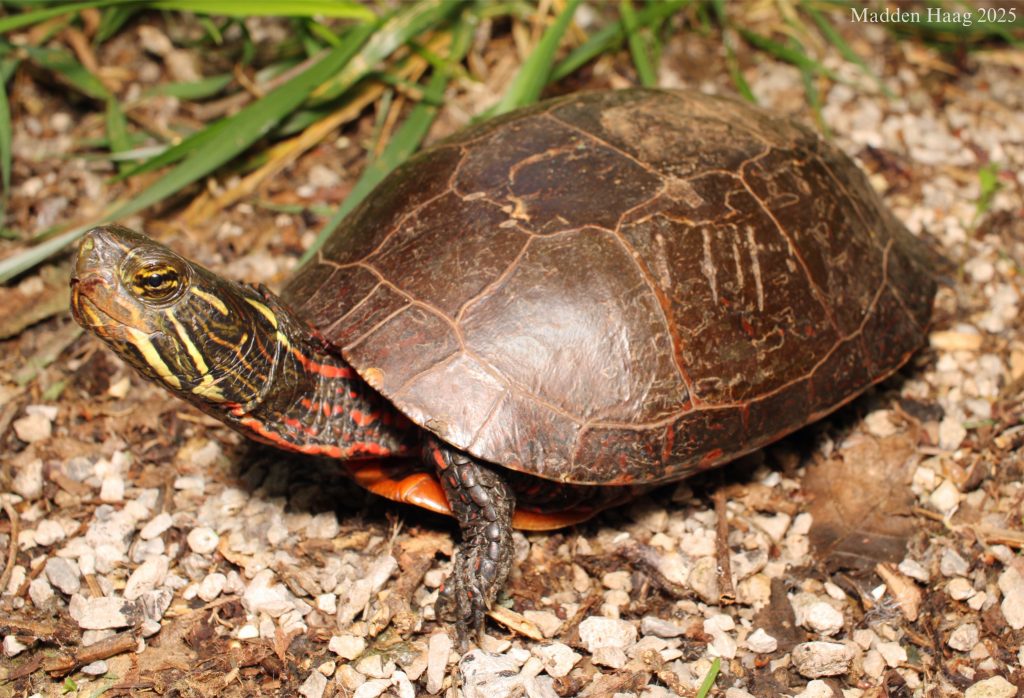
Painted turtle
Painted turtles are hardy and active, and adapt well to captivity with clean water, UVB light and a dry basking spot.
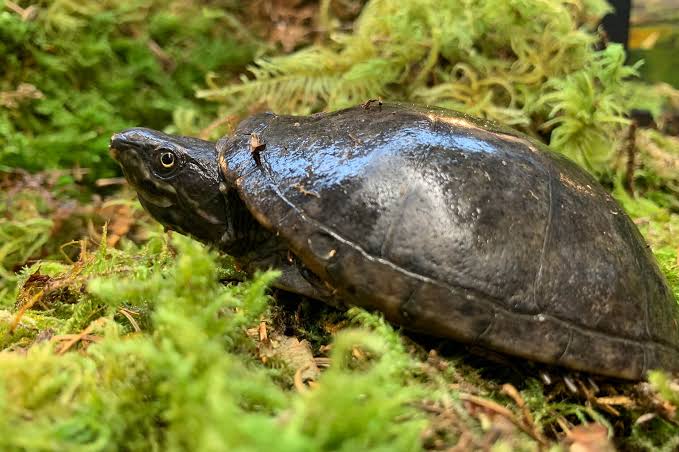
Musk turtle
Musk turtles stay smaller than many pet turtles, making them good for limited space. They still need strong filtration and regular water changes.
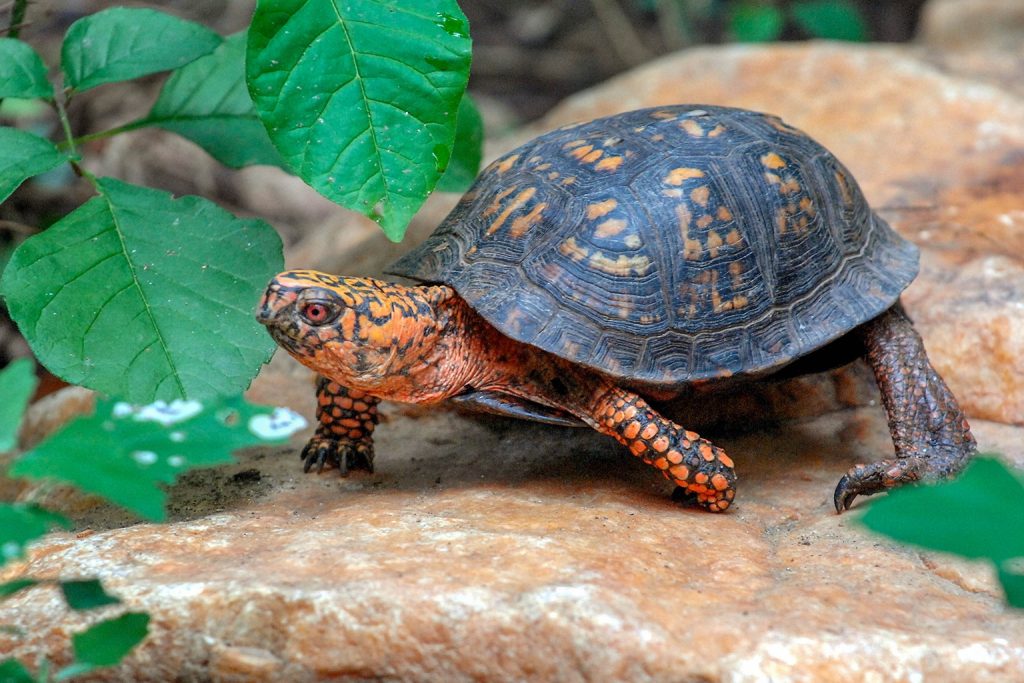
Box turtle
Box turtles live on land, so they need a spacious terrestrial enclosure with humidity and hides instead of a big water tank. Their care is very different from aquatic turtles.
| Species | Habitat | Good to know |
|---|---|---|
| Painted turtle | Aquatic with basking area | Hardy and active |
| Musk turtle | Aquatic, smaller tank | Stays small |
| Box turtle | Land-based enclosure | Needs humidity and hides |
| Red-eared slider | Large aquatic tank | Grows big and lives for decades |
Setting Up an Aquatic Turtle Tank
PetSmart carries turtle tanks, filters, docks, lamps and food from brands like Zoo Med, Fluker’s, Zilla, Exo-Terra and Thrive. Plan the whole setup before you get the turtle.
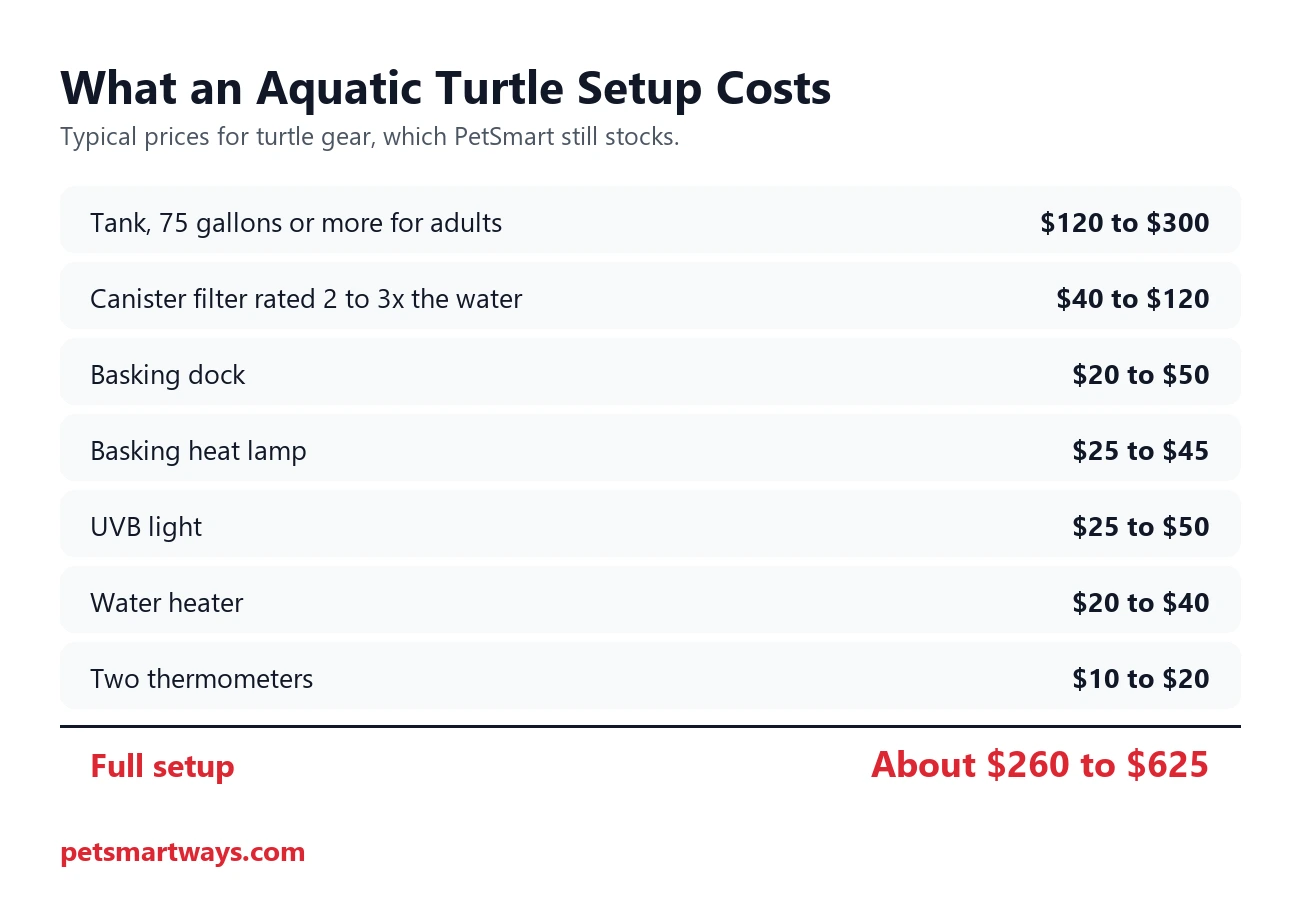
The tank is the biggest cost, and buying small usually means buying twice. A hatchling slider may start in 40 gallons, but adults need 75 gallons or more.
Aim for a basking spot around 90°F and water in the mid-70s for most aquatic species. Check with a reptile vet for your exact species.
Water Care Routine
| How often | Task |
|---|---|
| Every day | Remove uneaten food and check water and basking temperatures |
| Every week | Change about a quarter to half of the water |
| Every month | Rinse filter media in old tank water, not tap water |
| Every 6 to 12 months | Replace the UVB bulb as the maker recommends |
Use a water conditioner to remove chlorine from tap water. Test ammonia and nitrite regularly, just as you would in a fish tank.
Picking a Healthy Turtle
- Clear, bright eyes with no swelling
- A hard, smooth shell without soft spots, pits or white patches
- Swims evenly without listing to one side
- No bubbles from the nose or open-mouth breathing
- Alert and eats readily
Ask the seller about the turtle’s age, diet and how it was kept. A good breeder or rescue will answer easily.
Two Mistakes New Owners Make
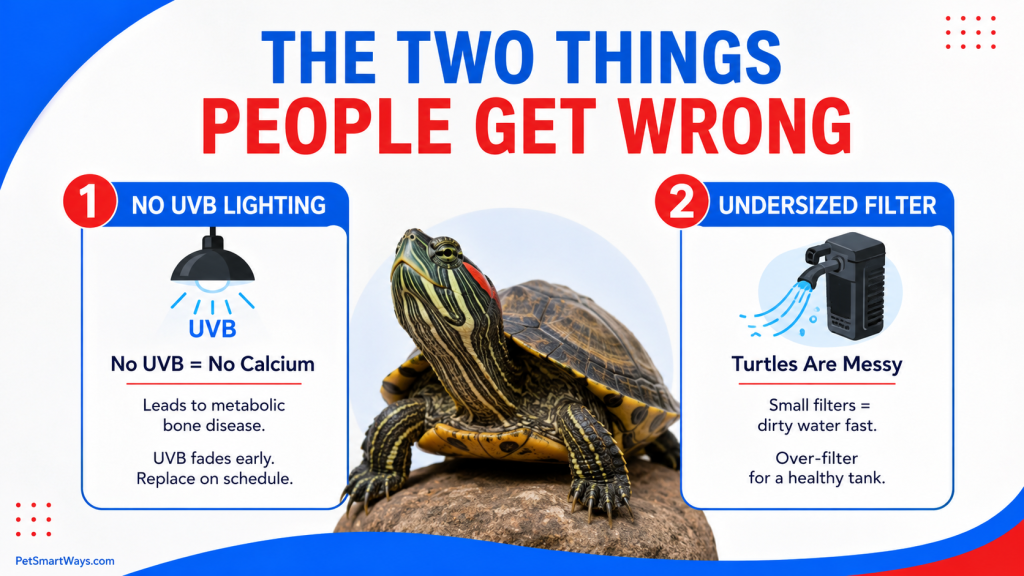
Skipping UVB lighting is the first. Without it, turtles can’t use calcium and develop metabolic bone disease, so replace UVB bulbs on schedule even if they still glow.
An undersized filter is the second. Turtles are much messier than fish, so choose a filter rated for two to three times your water volume.
Our fish tank guide and aquarium guide cover cycling and water care, which apply to turtle tanks too.
Turtle Supplies at PetSmart
Even without live turtles, PetSmart is a handy stop for setup and refills. Turtle pellets, water conditioner, filter media and replacement UVB bulbs are the items you’ll rebuy most.
Put food and filter media on Autoship to save on repeat orders, and earn Treats Rewards points on bigger purchases like tanks and filters.
Feeding a Pet Turtle
Most aquatic turtles eat commercial turtle pellets, plus leafy greens and occasional protein like insects or feeder fish. Young turtles usually eat more protein than adults.
Feeding in a separate tub keeps the main tank cleaner. Remove uneaten food so it doesn’t foul the water.
Turtles Are a Long Commitment
Many pet turtles live for decades, and some outlive their owners. Make sure you’re ready for that before bringing one home.
Find a reptile vet before you need one, and budget for annual checkups. Shell problems and respiratory infections are often linked to poor water or temperature.
Turtles, Kids and Salmonella
Turtles commonly carry salmonella even when they look healthy. Children under 5 are at the highest risk of serious illness.
- Wash hands with soap and water after touching a turtle, its tank or its water
- Don’t let turtles roam in kitchens or food prep areas
- Clean tank gear outside the kitchen sink, or disinfect the sink afterward
- Supervise children and keep turtles away from their faces
The CDC’s reptile safety page has more guidance for families.
Brumation
Some turtles slow down in cooler months, eating less and resting more. In captivity this is called brumation.
Don’t let a turtle brumate without a vet’s advice. An underweight or sick turtle can be harmed, and many keepers keep indoor turtles active year-round with steady temperatures.
Reptile Alternatives at PetSmart
If a turtle feels like too big a commitment, PetSmart’s other reptiles may suit you better. Leopard geckos at $34.99 and bearded dragons at $79.99 are popular with beginners.
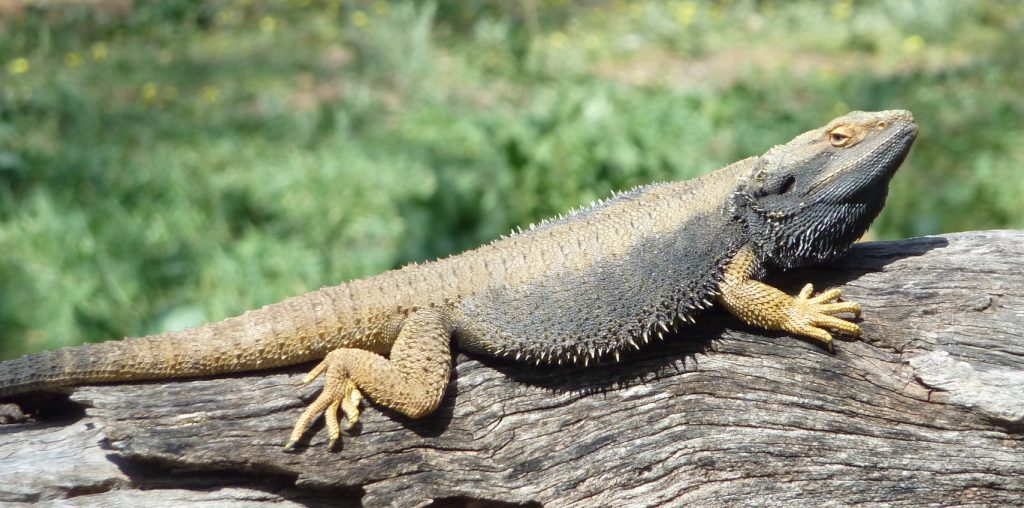
Snakes like the corn snake at $89.99 and ball python at $99.99 need less daily care than a turtle tank. Our PetSmart snakes guide explains the options.
Turtle Questions
Can I buy turtle food at PetSmart?
Yes, PetSmart sells turtle pellets, treats and supplements along with tanks and lighting.
Can I adopt a turtle through PetSmart?
Some PetSmart adoption partners have reptiles. Check with your store or see our adoption guide.
How long do pet turtles live?
Many aquatic species live 20 to 40 years with good care, and box turtles can live even longer.
Can a turtle live in a small tank?
Only briefly as a hatchling. Adults need much more space, often 75 gallons or more for common aquatic species.
Why are small turtles illegal to sell?
The four-inch rule aims to reduce salmonella infections in young children, who are most at risk.