PetSmart Fish Tank Guide For Beginners 2026
For a first aquarium, a 20-gallon tank or larger is the easiest to keep stable, and PetSmart sells everything to set one up. Tanks range from small betta kits under $30 to a 125-gallon tank and stand set at $999.99.
This guide helps you pick the right tank size and type, then choose a filter, heater and light that match. All prices are PetSmart’s listed prices from October 2026.
Pick Your Tank Size First
Small tanks look easier, but they’re harder to keep healthy. Less water means waste and temperature swings build up faster.
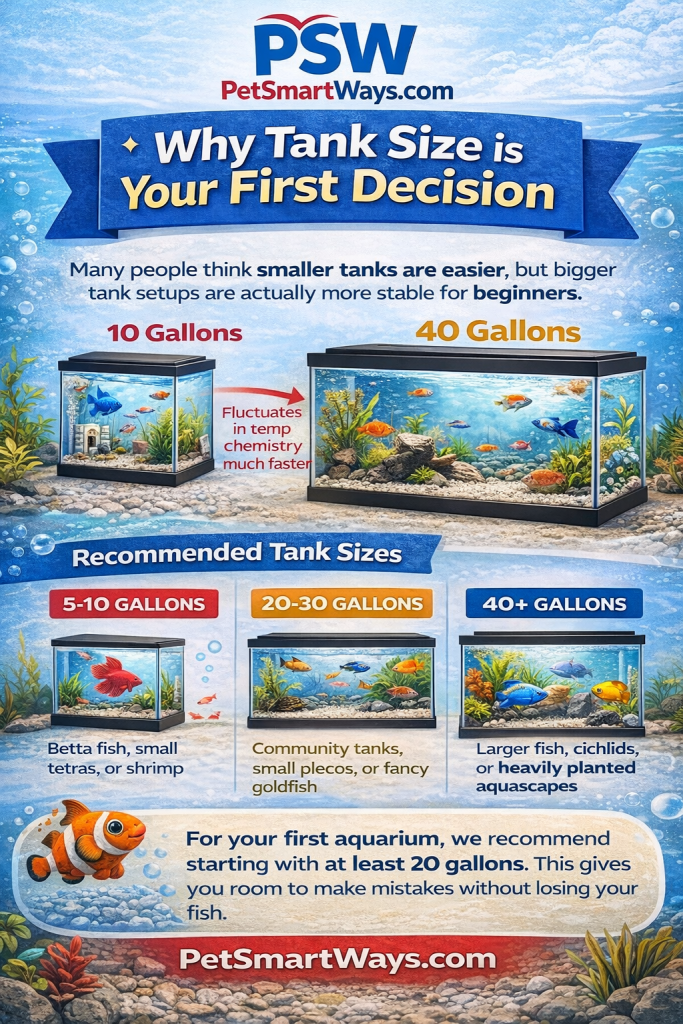
| Tank size | Good for |
|---|---|
| 3 to 5 gallons | One betta, or a few shrimp |
| 10 gallons | A betta with snails, or a few tiny fish |
| 20 to 30 gallons | A small community of platies, tetras and corys |
| 36 to 55 gallons | Larger communities, angelfish or fancy goldfish |
| 60 gallons and up | Cichlids and big planted tanks |
A 20-gallon tank is the sweet spot for most beginners. It fits on a stand in most rooms and gives you more fish choices.
Not sure which fish you want yet? Our PetSmart fish and aquarium guide lists fish prices and beginner species.
Starter Kit, Bare Tank or Full Set?

Starter kits bundle a tank, filter and light, and sometimes a heater. They’re the simplest way to begin, but the included gear is usually basic.
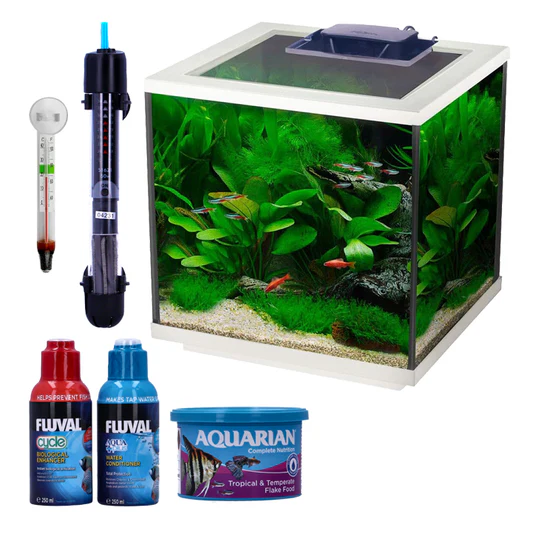
A bare tank lets you pick each part yourself. PetSmart’s Marineland open-glass tanks start at $36.99, and Aqueon standard glass tanks start at $26.99 for the smallest size.
Tank and stand sets suit bigger setups. PetSmart’s Top Fin 36-gallon set is $399.99, and Marineland’s 60-gallon LED set is also $399.99.
Starter Kits at PetSmart
| Kit | Size | Listed price |
|---|---|---|
| Top Fin All-In-One Betta Starter Kit | 3 gallons | $27.49 |
| Top Fin Corner Tank Starter Kit | 6 gallons | $42.49 |
| Top Fin Cube Essentials Starter Kit | 10 gallons | $44.99 |
| Top Fin Bow Front Starter Kit | 36 gallons | $143.99 |
Top Fin Essentials starter kits of 10 gallons and under were 50% off through November 1, 2026. Check the price in store, since deals change often.
Even with a kit, plan to buy a test kit, conditioner and decor separately. Some kits also need a heater added.
Specialty and Desktop Tanks
PetSmart also sells small shaped tanks like hexagon, half-moon and bowfront designs from 1 to 5 gallons. They work for a single betta on a desk or shelf.
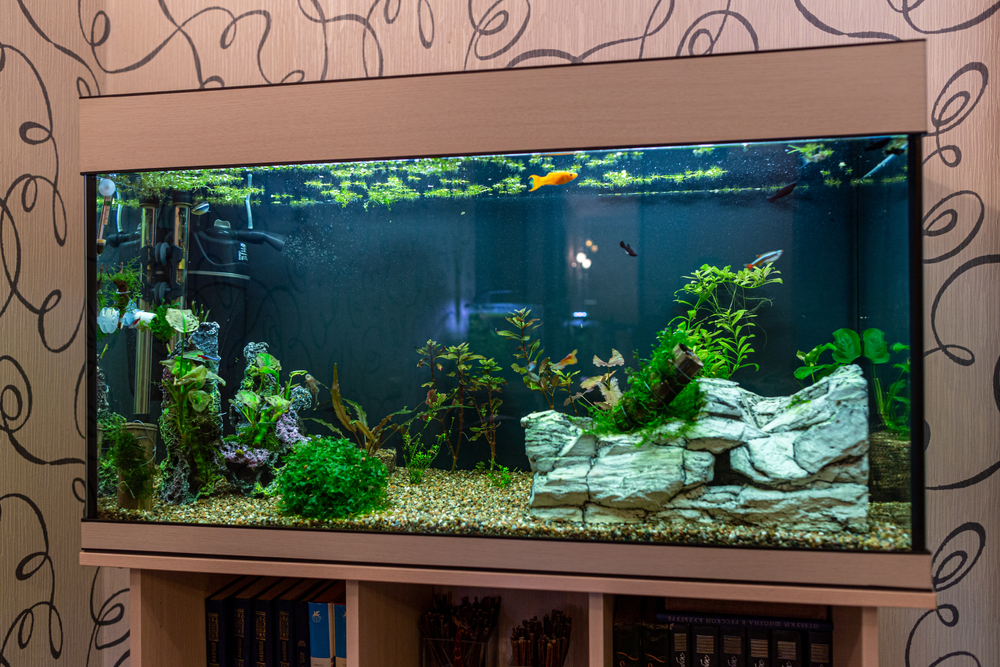
Small tanks need more frequent water changes and careful stocking. They aren’t a shortcut to an easier aquarium.
Choosing a Filter
The filter removes waste and holds the bacteria that keep fish safe. Pick one rated for your tank size, or slightly larger.
| Filter type | Best for | PetSmart example |
|---|---|---|
| Hang-on-back power filter | Most tanks from 10 to 75 gallons | Top Fin Silenstream, from $17.79 |
| Power filter, upgraded | Quieter, adjustable flow | Fluval AC, from $49.99 |
| Internal filter | Small tanks and kits | Top Fin internal filters |
| Canister filter | Large or heavily stocked tanks | Fluval FX6, $406.99 |
Replacement cartridges are an ongoing cost, starting under $10 for Top Fin packs. Rinse cartridges in old tank water rather than replacing them all at once.
Choosing a Heater
Tropical fish need steady warm water, usually in the mid to upper 70s Fahrenheit. PetSmart’s Top Fin Compact heaters start at $14.99 and come in 50 to 150 watts.
A common guide is about 3 to 5 watts per gallon, using the higher end in cold rooms. Always pair a heater with a thermometer.
Goldfish and minnows don’t need a heater at normal room temperature. Keep them in a separate unheated tank.
A Tank for a Betta
Bettas do best in a heated tank of 5 gallons or more with a gentle filter. Small bowls make clean, warm water hard to maintain.
PetSmart’s Top Fin betta kits start at $27.49 for 3 gallons. If you choose a small kit, add a small heater and change some water every week.
Planted Tank Basics
Live plants soak up waste and give fish hiding spots. Easy plants like java fern and anubias cost $6.99 each at PetSmart and don’t need special soil.
For rooted plants, a plant substrate like Fluval Plant and Shrimp Stratum helps, starting at $15.99. A Top Fin live plant variety pack is $17.99.
Lights, Lids and Stands
An LED light shows off your fish and helps live plants grow. Run it 8 to 10 hours a day, since longer days feed algae.
A lid keeps fish from jumping and cuts evaporation. Top Fin hinged glass lids start at $16.99.
Use a stand made for aquariums, not a regular table. PetSmart’s Top Fin stands start at $59.99, and larger furniture-style stands cost $159.99 to $319.99.
What a Full Setup Costs
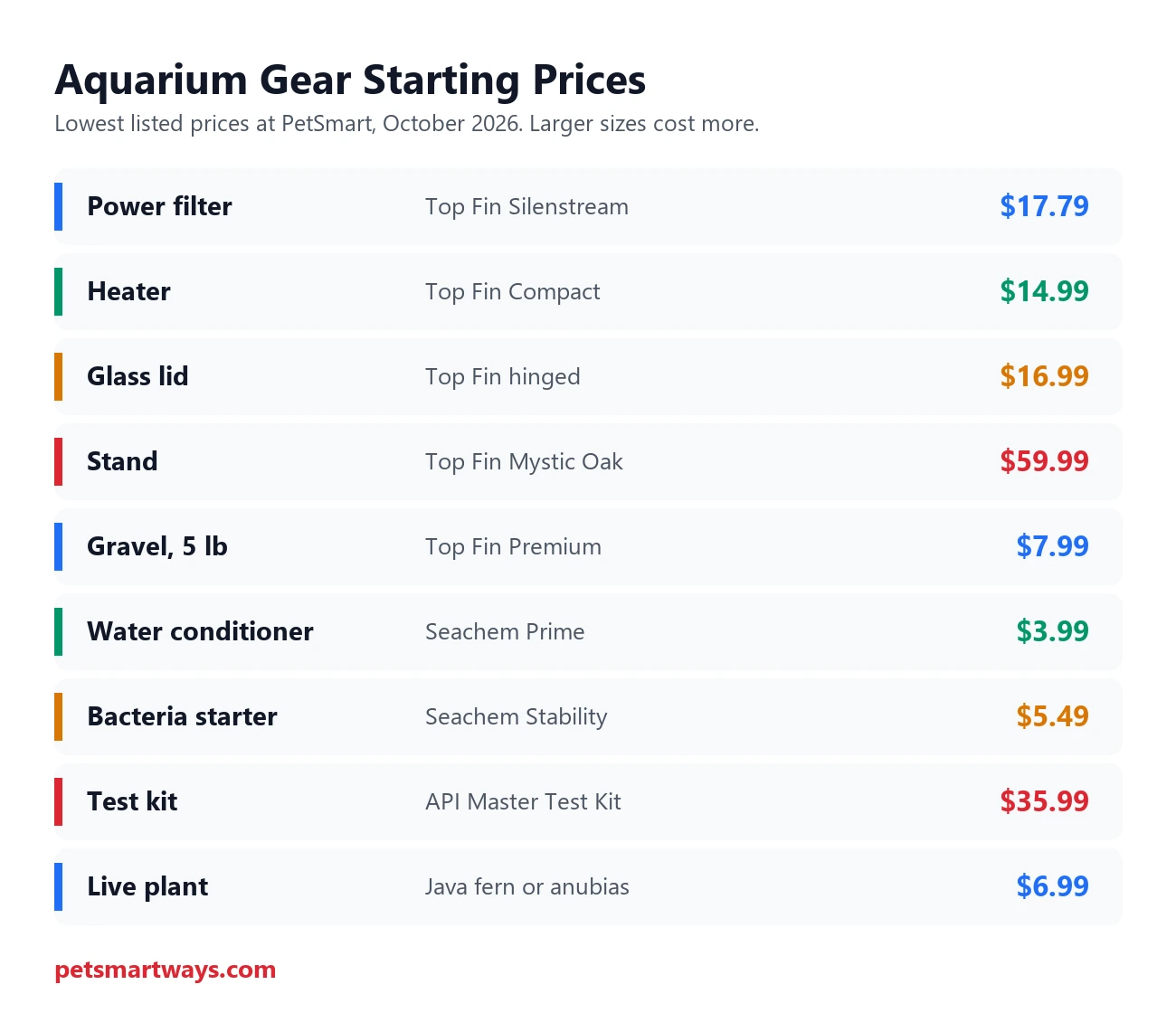
These are starting prices, and gear for a 20-gallon tank often costs a bit more than the smallest size. Add the tank itself, then fish and food.
A simple 20-gallon setup with basic gear usually comes to a few hundred dollars, especially with a stand. Watch for sales on kits and tanks to cut that down.
Glass or Acrylic?
Most PetSmart tanks are glass, which resists scratches and stays clear for years. Glass is also usually cheaper.
Acrylic is lighter and less likely to shatter, which helps with very large tanks. It scratches more easily, so clean it with acrylic-safe pads.
Where to Put Your Tank
Water weighs about 8.3 pounds per gallon, so a filled 20-gallon tank weighs well over 150 pounds with gravel and decor. Use a level, sturdy surface.
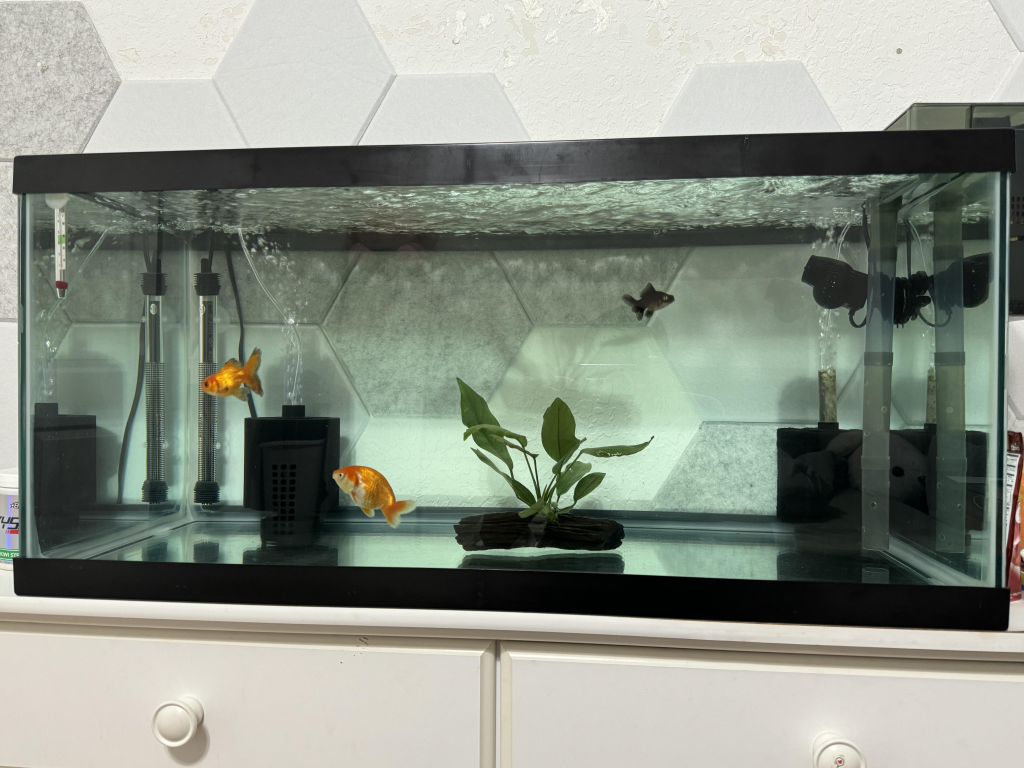
- Keep it out of direct sunlight to limit algae and heat swings
- Place it near an outlet, with a drip loop on every cord
- Avoid spots near heaters, air vents and doors
- Leave room above for feeding and maintenance
Setting It Up
- Rinse the tank with water only, never soap
- Set it on the stand and check it’s level
- Add rinsed gravel, then decor and plants
- Fill with water treated with conditioner
- Install the filter, heater and light, then switch them on
- Add bacteria starter and let the tank cycle
Seachem Prime conditioner starts at $3.99 and Seachem Stability bacteria starter at $5.49 at PetSmart. Cycling usually takes a few weeks.
Testing the Water
Ammonia and nitrite should read zero before you add fish. The API Freshwater Master Test Kit costs $35.99 and tests pH, ammonia, nitrite and nitrate.
PetSmart stores also test water for free. It’s a good backup while you learn to read your own results.
Routine Tank Care
| How often | Task |
|---|---|
| Daily | Feed small amounts and check fish and temperature |
| Weekly | Change 10 to 25 percent of the water and wipe algae |
| Every 2 to 4 weeks | Rinse filter media in old tank water |
| Monthly | Test water and trim plants |
A siphon gravel vacuum makes water changes faster by pulling out waste with the old water. Always treat new tap water with conditioner.
Common Tank Problems
Cloudy water in a new tank is usually a bacteria bloom and clears on its own in a few days. Don’t add fish until the tank finishes cycling.
Green algae often means too much light or food. Cut the light to 8 hours and feed less.
If fish gasp at the surface, test the water right away and do a partial water change. Add an air pump, from $10.09 at PetSmart, for extra oxygen.
Upgrading Later
Many keepers start with a kit and upgrade the filter or light within a year. Buying a slightly bigger filter from the start saves that step.
If you want a larger tank later, set it up and cycle it before moving fish. Moving some filter media from the old tank speeds up cycling.
Saving on Your Tank
PetSmart runs regular aquarium deals, such as bonus Treats points on Marineland and Aqueon tanks. Our PetSmart coupons guide lists current offers.
Treats Rewards points add up on filters, food and conditioner over time. See our Treats Rewards guide for how points work.
Fish Tank Questions
What size fish tank should a beginner buy?
A 20-gallon tank is a good first choice. It’s more stable than small tanks and fits a small community of fish.
How much is a fish tank at PetSmart?
Small betta kits start under $30, the 36-gallon Top Fin kit is $143.99, and large tank and stand sets run $399.99 to $999.99.
Does a starter kit come with everything?
Most include a tank, filter and light. You’ll usually still need a heater, test kit, conditioner, gravel and decor.
Do I need an air pump?
Not always, since a good filter moves the surface water. An air pump helps in warm or crowded tanks.
How long before I can add fish?
Wait until the tank has cycled, which usually takes a few weeks. Ammonia and nitrite should both test at zero first.
Can I return a fish tank to PetSmart?
Unused items can usually be returned with a receipt. Our return policy guide explains the rules.