PetSmart Bearded Dragon Guide & Cost 2026
A bearded dragon costs $79.99 at PetSmart, but a proper setup brings the first year to roughly $1,000 to $1,950. The enclosure, lighting and live food cost far more than the lizard.
| Quick fact | Details |
|---|---|
| PetSmart price | $79.99 |
| Adult size | Up to 24 inches |
| Lifespan | About 10 years, per PetSmart |
| Experience level | Beginner |
| Biggest cost | Enclosure and UVB lighting |
PetSmart often runs reptile sales, and in October 2026 it offered in-store discounts on bearded dragons. Check before you buy.
What Owning a Bearded Dragon Is Like
PetSmart rates bearded dragons as a good choice for beginners. They’re among the most social reptiles and usually tolerate handling well.
They communicate by waving and bobbing their heads, which is fun to watch. Many happily sit on a shoulder or lap once they trust you.
They live around 10 years, and well-kept dragons can live longer. That’s a long commitment to feeding, lighting and vet care.
First-Year Costs
Plan the full setup before you bring a dragon home. These estimates assume an adult-sized enclosure from the start.


After the first year, costs drop to mostly food, electricity and vet care. Expect roughly $550 to $1,100 a year from then on.
Set Up Before You Buy
Have the enclosure running before your dragon comes home. It gives you time to fix problems without stressing a new pet.
- Assemble the enclosure and install lighting and decor
- Run the lights and heat for 2 or 3 days
- Check temperatures at the basking spot and cool side each day
- Stock greens, calcium powder and a first batch of insects
- Book a reptile vet checkup for the first couple of weeks
Enclosure Size
Older guides often say 40 gallons is enough, but that’s now seen as too small for an adult. Many reptile vets and experienced keepers recommend about 4 feet long by 2 feet wide and 2 feet tall, or roughly 120 gallons.
Babies can start in a smaller tank, but they grow fast. Buying the adult enclosure up front usually saves money.
Front-opening enclosures make handling and cleaning easier. A secure screen top is needed for lighting and airflow.
Lighting and Heat
Bearded dragons need strong UVB light to process calcium. Without it, they can develop metabolic bone disease, which is painful and often permanent.
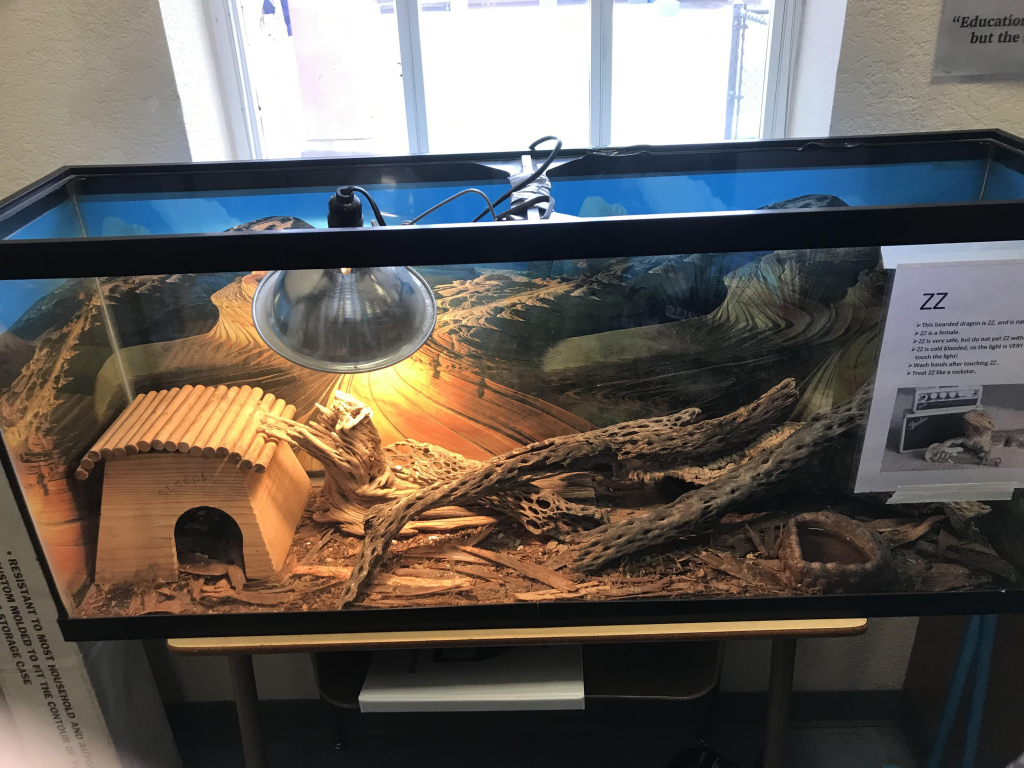
| Equipment | Why it matters |
|---|---|
| Linear UVB tube, often T5 | Lets the dragon make vitamin D3 and use calcium |
| Basking bulb | Creates a hot spot for digestion |
| Thermostat or dimmer | Prevents overheating |
| Digital thermometers | Check the basking spot and cool side |
Give 12 to 14 hours of light in summer and slightly less in winter. Replace UVB tubes as the maker recommends, since UVB output fades long before the light looks dim.
Keep a warm basking side and a cooler side so your dragon can move between them. Turn lights off at night, and avoid colored night bulbs that disrupt sleep.
Temperature guide
| Zone | Typical target |
|---|---|
| Basking spot, adults | About 95 to 110°F |
| Basking spot, babies | About 100 to 110°F |
| Cool side | About 75 to 85°F |
| Night | About 65 to 75°F |
Measure with a digital probe or temperature gun rather than a stick-on dial. Your reptile vet can fine-tune these for your dragon’s age.
Substrate, Hides and Decor
Loose sand can cause impaction if swallowed, especially in young dragons. Tile, paper towels or reptile carpet are safer and easy to clean.
Add a basking platform, a hide on each side and branches for climbing. Many items are cheaper at home improvement stores, as long as they’re safe and clean.
Feeding
Young dragons need lots of insects to grow, while adults eat mostly greens. The balance shifts gradually over the first 18 months.

| Live food at PetSmart | Price |
|---|---|
| Live crickets | 17 cents each, less in bulk |
| Mealworms, 50 count | $2.99 |
| Giant mealworms, 35 count | $3.99 |
| Superworms, 50 count | $8.99 |
| Waxworms, 50 count | $5.99 |
Crickets and Dubia roaches make good staple insects. Mealworms, superworms and waxworms are better as occasional treats because they’re higher in fat.
Dust insects with calcium powder, and use a multivitamin on a schedule your vet suggests. Offer fresh greens daily, like collard greens, mustard greens and squash.
Safe and unsafe foods
| Good staples | Avoid |
|---|---|
| Collard, mustard and turnip greens | Avocado |
| Dandelion greens | Onions and garlic |
| Squash and bell pepper | Rhubarb |
| Small amounts of fruit as treats | Fireflies and wild-caught bugs |
| Gut-loaded crickets and roaches | Large amounts of spinach or iceberg lettuce |
Offer insects no wider than the space between your dragon’s eyes. Oversized prey can cause choking or impaction.
Gut-loading insects
Feed insects nutritious greens or a gut-load diet for a day before offering them. Your dragon gets the benefit of what the insects ate.
Remove uneaten crickets after feeding, since they can nibble on a sleeping dragon.
Water and Bathing
Many bearded dragons don’t drink much from a bowl. A shallow, warm soak a couple of times a week helps with hydration and shedding.
Mist greens lightly before feeding to add water to the diet. Always supervise baths and keep the water shallow.
Handling and Taming
Give a new dragon about a week to settle before regular handling. Let it watch you from the tank and get used to your voice.
Scoop it from below with your hand under its belly, supporting all four legs. Short, calm sessions build trust faster than long ones.
Shedding
Bearded dragons shed in patches rather than all at once. Young dragons shed often, while adults shed a few times a year.
Warm soaks help loosen old skin. Never pull skin off, and watch toes and the tail tip, where stuck shed can cut off circulation.
Brumation
Many adult dragons slow down in fall or winter, sleeping more and eating less. This is called brumation and can last weeks to months.
Get a vet check before assuming it’s brumation, since illness can look similar. During brumation, keep fresh water available and weigh your dragon regularly.
Daily and Weekly Care
| How often | Task |
|---|---|
| Every day | Fresh greens, insects as needed, spot clean waste |
| Every day | Check basking and cool side temperatures |
| A few times a week | Warm soak and calcium-dusted insects |
| Every week | Wipe down surfaces and wash food dishes |
| Every month | Deep clean the enclosure and decor |
| Every 6 to 12 months | Replace the UVB tube as directed |
Reading Your Dragon’s Mood
| Calm and healthy | Stressed or unwell |
|---|---|
| Bright colors and alert eyes | Dark stress marks on the belly |
| Basks and explores normally | Glass surfing or constant pacing |
| Relaxed, pale beard | Black, puffed-up beard for long periods |
| Eats eagerly | Refuses food for more than a few days |
Occasional beard darkening is normal, especially around other animals. Ongoing stress signs are worth checking against your setup and with a vet.
Picking a Healthy Dragon in Store
- Alert, with clear eyes and no discharge
- Full, rounded tail base without visible hip bones
- Straight limbs and all toes present
- No bubbles at the nose or open-mouth breathing
- Eating well when offered food
Watch how the dragon reacts to movement. Healthy dragons notice you and lift their heads.
Health and Vet Care
Find a reptile vet before you buy, since many general clinics don’t treat reptiles. Annual checkups often cost $75 to $150.
Common problems include metabolic bone disease, respiratory infections and parasites. Most are linked to lighting, temperature or diet, so a correct setup prevents a lot of vet bills.
Every bearded dragon PetSmart sells comes with its 14-day promise to replace or refund a pet that becomes ill. Keep your receipt.
Travel and Vet Trips
Use a small ventilated carrier with a towel for vet visits. In cold weather, wrap the carrier and keep the car warm, since dragons chill quickly.
For trips away from home, a reptile-savvy sitter is safer than boarding. Leave clear notes on lighting times, feeding and temperatures.
Reptiles and Hygiene
PetSmart notes that all animals can carry germs contagious to people, and reptiles commonly carry salmonella. Wash hands with warm, soapy water before and after handling.
Adults should help children wash up after touching a dragon or its tank. Keep reptile gear away from kitchen sinks and food areas.
Bearded Dragon vs Other PetSmart Reptiles
| Reptile | Good for |
|---|---|
| Bearded dragon | Handling and interaction |
| Leopard gecko | Smaller setups and night activity |
| Ball python | Owners who want a calm snake |
| Turtles | People ready for big water setups |
Compare care needs in our PetSmart reptile guide, snakes guide and turtles guide.
Saving Money on Supplies
Buy the enclosure and lighting before the dragon, watching for reptile sales. Our PetSmart coupons guide lists current offers.
Buying insects in bulk lowers the price per bug. Join Treats Rewards to earn points on recurring food and supplies.
Bearded Dragon Questions
How big do bearded dragons get?
Up to about 24 inches from nose to tail, according to PetSmart.
Can bearded dragons live together?
Most keepers house them alone, since they can fight or compete for heat and food.
Do bearded dragons bite?
Rarely, and usually only if they mistake a finger for food or feel threatened. Most bites are minor, but wash any bite well.
Can a bearded dragon live in a 40-gallon tank?
A baby can for a while, but adults need more room. Most keepers now aim for about a 4 by 2 by 2 foot enclosure.
Can I return a bearded dragon to PetSmart?
Within 14 days, PetSmart will replace it or refund the price if it becomes ill or you’re not satisfied. See our return policy guide.