PetSmart Parakeet Guide & Prices 2026
PetSmart sells parakeets for $44.99, whether you choose a green, blue or fancy-colored bird. With a cage, food, perches and toys, expect to spend around $190 or more to get started.
Parakeets, also called budgies, are small parrots that grow up to 7 inches and live 7 to 10 years on average, according to PetSmart’s care sheet. Here’s what they cost, what they need and how to choose a healthy bird.
Parakeet Prices at PetSmart
| Parakeet | Listed price |
|---|---|
| Green parakeet | $44.99 |
| Blue parakeet | $44.99 |
| Fancy parakeet | $44.99 |
These were PetSmart’s listed prices in October 2026, and birds are sold in store only. Through October 18, 2026, Treats members could also earn 25X points on birds in store.
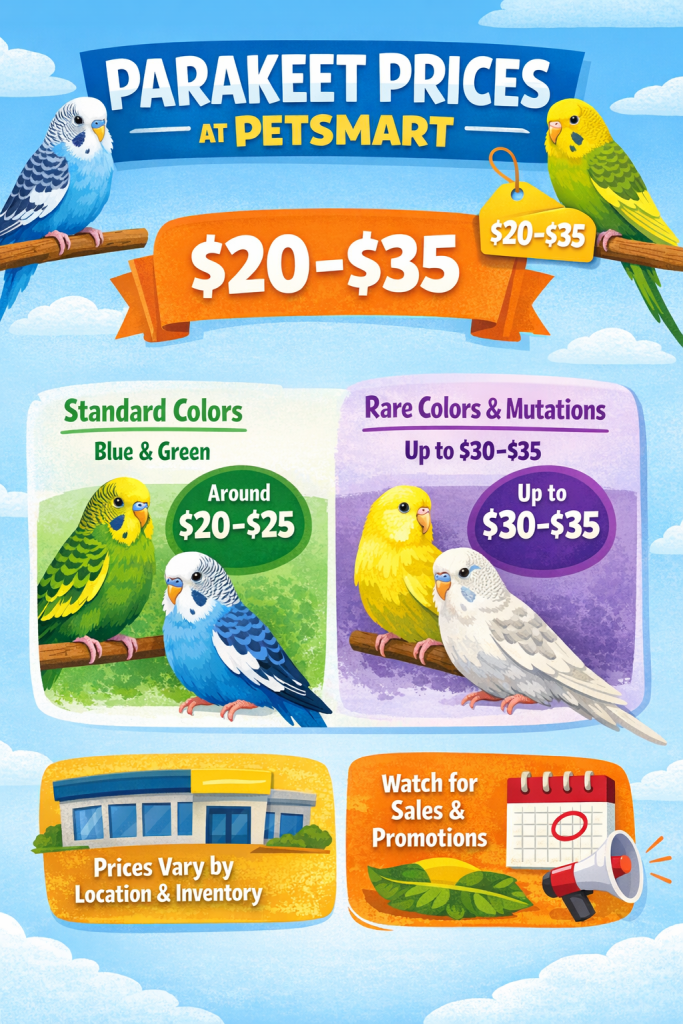
Stock and colors vary by store, so call ahead if you want a particular color. Our PetSmart birds guide compares parakeets with canaries, finches, cockatiels and conures.
Why Parakeets Make Good First Birds
PetSmart describes budgies as affectionate birds that build relationships with their owners. Many learn to mimic sounds and even words.
They’re small, cheaper than larger parrots and easier to house. They still need daily attention, though, since they’re social flock birds.
Parakeet Care at a Glance
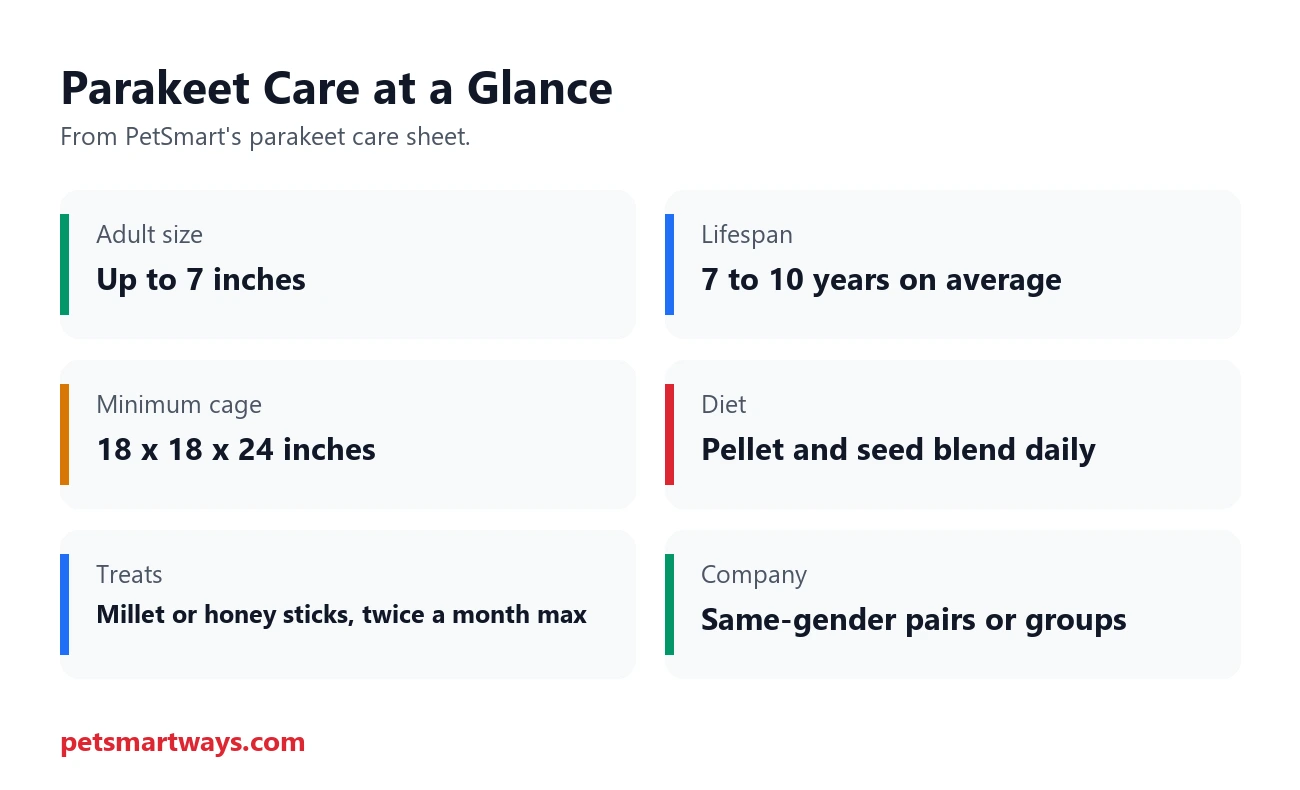
PetSmart’s care sheet lists a minimum cage of 18 by 18 by 24 inches, with bigger always better. Parakeets do best in same-gender pairs or groups.
One Parakeet or Two?
PetSmart says parakeets thrive living in same-gender pairs or groups. Two birds keep each other company while you’re away.
A single bird can bond closely with you, but it needs a lot of daily interaction. If you work long hours, a pair is the kinder choice.
Choosing two of the same gender avoids unplanned eggs. Ask an associate to help, since young budgies can be hard to sex.
What a Starter Setup Costs

This example uses real PetSmart prices and comes to about $193 with the bird. A larger cage or extra toys will raise the total.
Check cage measurements before you buy, since the minimum is 18 by 18 by 24 inches. Wide cages give more room to fly than tall, narrow ones.
Bringing Your Parakeet Home
PetSmart sends birds home in a small travel box. Drive straight home and keep the box out of the sun and away from car vents.
Set the cage up before you shop, with food, water and perches ready. Open the box at the cage door and let your bird walk in on its own.
Keep the room calm for the first few days. A quiet start helps a new bird eat and settle.
Setting Up the Cage
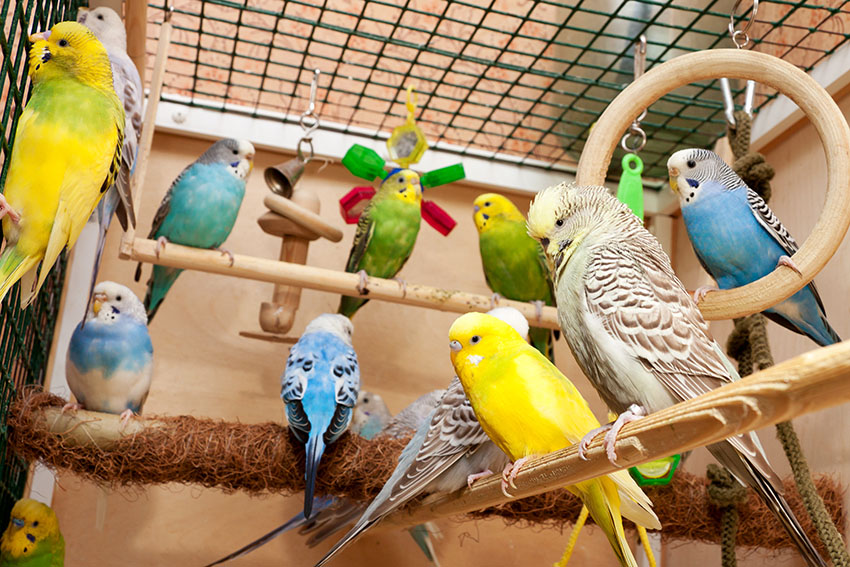
- Keep the cage at or below eye level
- Place it away from kitchens and cooking fumes, especially non-stick cookware
- Avoid drafts, strong smells and direct sunlight
- Offer at least three toys and rotate them often
- Use a cage liner and change it regularly
- Cover the cage at night so your bird feels secure
Non-stick pans can release fumes that are deadly to birds, so the kitchen is never a safe spot. PetSmart’s care sheet calls this out specifically.
Natural wood perches of different widths help keep feet healthy. A shallow dish for splashing lets your parakeet bathe.
Feeding Your Parakeet
PetSmart recommends a pellet and seed blend as the main diet. Replace food daily and keep the bowl about three-quarters full.
Fresh fruits, vegetables and grains every other day add variety. Leafy greens, carrots and broccoli are good choices.
Treats like millet spray and honey sticks should be offered no more than twice a month. Never feed chocolate, sugar, fried food, avocado or junk food.
Out-of-Cage Time
Parakeets need daily time outside the cage to stretch their wings. PetSmart suggests a T-stand or indoor playpen for this.
Close windows and doors, turn off ceiling fans and cover mirrors before letting your bird out. Stay in the room the whole time.
Taming Your Parakeet
Give your new bird a few days to settle before trying to handle it. Sit near the cage and talk softly so it gets used to your voice.
Next, rest your hand in the cage without moving. Over days, offer a treat from your fingers, then encourage it to step onto one finger.
Short daily sessions work better than long ones. Most parakeets warm up with patience and routine.
Toys and Enrichment
PetSmart’s care sheet suggests puzzles, chewable toys and foraging items to encourage natural behavior. Parakeets get bored quickly without them.
Rotate a few toys each week so the cage feels new. Swings, ladders, bells and shreddable paper toys are favorites.
Bathing and Grooming
PetSmart recommends misting your parakeet gently with warm water two or three times a week. Many birds also enjoy a shallow dish to splash in.
A cuttlebone or mineral block gives calcium and helps keep the beak in shape. Overgrown nails or a beak that doesn’t close normally need a vet visit.
Understanding Parakeet Behavior
| Behavior | What it usually means |
|---|---|
| Soft chattering and singing | A happy, relaxed bird |
| Beak grinding at night | Content and getting ready to sleep |
| Head bobbing | Excitement or seeking attention |
| Fluffed feathers for long periods | Possible illness, so watch closely |
| Sitting on the cage floor | A warning sign that needs a vet |
Learning your bird’s normal habits makes it easier to spot when something is wrong. Birds often hide illness until they’re quite sick.
Cleaning Routine
| How often | Task |
|---|---|
| Daily | Fresh food and water, wipe up droppings |
| Weekly | Change liners, wash perches and dishes |
| Monthly | Scrub the whole cage and toys |
Use a bird-safe cleaner and rinse well. Strong sprays and air fresheners can harm a bird’s lungs.
Parakeets and Other Pets
Cats and dogs can see small birds as prey, even if they seem calm. Keep the cage secure and never leave your bird out with other pets.
A sturdy cage with a locking door is a must in homes with cats. Place it where other pets can’t climb or knock it over.
Choosing a Healthy Parakeet
- Bright, clear eyes and clean nostrils
- Smooth feathers lying flat against the body
- Active and alert, not fluffed up in a corner
- Clean vent feathers with no staining
- Normal breathing without tail bobbing
Watch the birds for a few minutes before choosing. Ask an associate to catch the one you pick.
Health and Vet Care
PetSmart recommends a vet visit within 14 days of purchase and monitoring a new bird in its own cage for 30 days. Look for an avian vet through the Association of Avian Veterinarians.
Contact a vet if your bird sits on the cage floor, eats less, stays fluffed up, sneezes, has discharge or has runny droppings for more than two days.
PetSmart’s 14-Day Promise
Birds from PetSmart are part of its Vet Assured program. If your parakeet becomes ill within 14 days, or you’re not satisfied for any reason, PetSmart will replace it or refund the price.
Keep your receipt. Our return policy guide covers returns of cages and supplies.
Ongoing Costs
After setup, the main costs are food, cage liners and new toys. A 2-pound bag of All Living Things Seed and Pellet Medley costs $10.99 and lasts a single parakeet for weeks.
Plan for a yearly avian vet visit, which costs more than food and supplies. Setting aside a little each month makes vet bills easier.
Vacations and Bird Sitters
Parakeets need fresh food and water every day, so they can’t be left alone for long trips. Ask a trusted friend to visit daily or hire a pet sitter who knows birds.
Leave written notes on feeding, cleaning and your vet’s number. Keep the routine the same so your bird stays calm.
Is a Parakeet Right for You?
A parakeet can live 7 to 10 years and needs daily food, water, cleaning and attention. Birds can also be noisy, especially in the morning.
If you travel often, plan who will care for your bird while you’re away. Birds don’t do well left alone for days.
Saving on Bird Supplies
Food, liners and toys are ongoing costs, so buying in larger sizes saves money. Treats Rewards points add up on every purchase, as our Treats Rewards guide explains.
PetSmart runs bird and supply deals often. Check our PetSmart coupons guide before you shop.
Parakeet Questions
How much is a parakeet at PetSmart?
PetSmart lists green, blue and fancy parakeets at $44.99.
How long do parakeets live?
PetSmart’s care sheet says 7 to 10 years on average.
What size cage does a parakeet need?
At least 18 by 18 by 24 inches, and bigger is better for pairs.
Can parakeets talk?
Many can mimic words and sounds. Males are often more vocal, but every bird is different.
Do parakeets need a companion?
PetSmart says they thrive in same-gender pairs or groups. A single bird needs lots of daily time with you.
What should parakeets not eat?
Chocolate, sugar, fried food, avocado and junk food. Limit millet and honey sticks to twice a month.
Are parakeets loud?
They chatter and sing throughout the day, especially in the morning. They’re quieter than larger parrots like conures.
Can I buy a parakeet online?
No. Live birds are sold in PetSmart stores.