PetSmart Guinea Pig Price and Real First-Year Cost
A guinea pig costs $59.99 at PetSmart, or $89.99 for a Fancy Guinea Pig. Because they should live in pairs and need a big cage, the first year usually costs $1,300 or more.
| Item | Cost |
|---|---|
| Regular guinea pig | $59.99 |
| Fancy guinea pig | $89.99 |
| Setup for a pair | About $290 to $495 |
| Food and bedding for a pair | About $75 to $110 a month |
Those are PetSmart’s listed prices in October 2026. Stores often run small pet sales, so check before you buy.
Why Guinea Pigs Need a Friend
PetSmart’s care sheet says guinea pigs do best in same-sex pairs or small groups of three to five. They’re herd animals and get lonely on their own.
That means budgeting for two pigs and a cage that fits them both. Pigs from the same litter, or already housed together in store, bond most easily.
Never house an unneutered male and female together. Guinea pigs breed quickly and females can become pregnant again soon after giving birth.
Introducing two adult guinea pigs
- Quarantine the new pig for a couple of weeks and get it checked by a vet
- Meet on neutral ground, like a clean playpen neither pig has used
- Scatter plenty of hay and vegetables to keep them busy
- Expect rumbling and chasing, but separate them if they fight or draw blood
- Move them into a freshly cleaned cage once they settle
Cage Size
PetSmart lists a minimum habitat of 24 by 36 by 24 inches with a solid bottom. Many rescues recommend more, often about 7.5 square feet for one pig and 10.5 square feet for a pair.
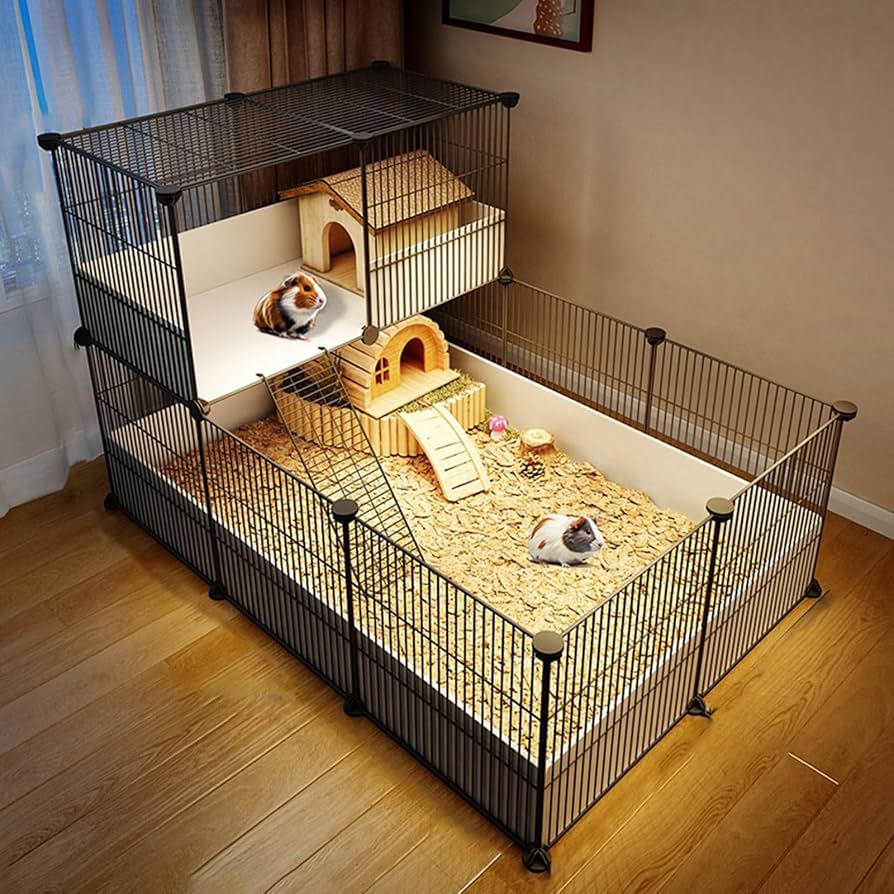
Floor space matters more than height, since guinea pigs don’t climb. Tall multi-level cages add less usable room than they look.
Many owners build C&C cages from wire grids and corrugated plastic. They often give more space for less money than a large store-bought cage.
Habitat Setup
PetSmart’s care sheet covers the basics for a healthy home.
- Keep the habitat at 65 to 75 degrees, out of direct sun and humidity
- Fill a hay feeder for chewing, which keeps teeth healthy
- Add one or two hides so each pig has a safe place to rest
- Include wood chews and toys for enrichment
- Deep clean and change all bedding every two weeks
Give each pig its own hide and water bottle to avoid squabbles. Paper bedding or washable fleece liners both work well.
Setup Costs for a Pair
| Item | Estimated cost |
|---|---|
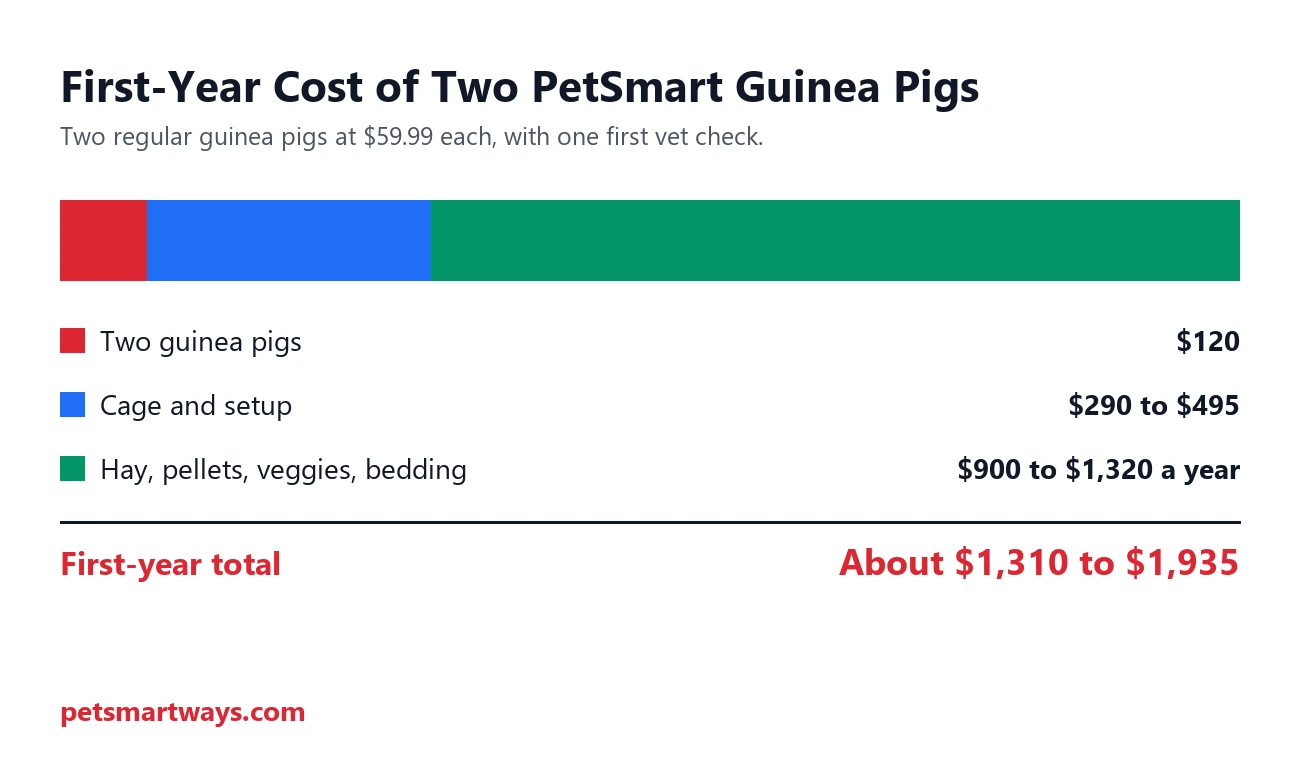
| Two regular guinea pigs | $120 |
| Cage or C&C build, 10.5 sq ft or more | $100 to $200 |
| Two hides | $25 to $40 |
| Hay rack | $12 to $20 |
| Two water bottles | $15 to $25 |
| Heavy food bowls | $12 to $20 |
| Starter bedding or fleece | $25 to $40 |
| Carrier | $25 to $35 |
| Nail clippers and brush | About $15 |
| First exotic vet visit | $60 to $100 |
That adds up to roughly $410 to $615 for a pair, including the pigs. The cage is the biggest variable.
Monthly Costs
| Item | Monthly cost for a pair |
|---|---|
| Timothy hay | $25 to $35 |
| Fortified guinea pig pellets | $12 to $18 |
| Fresh vegetables | $20 to $30 |
| Bedding | $20 to $30 |
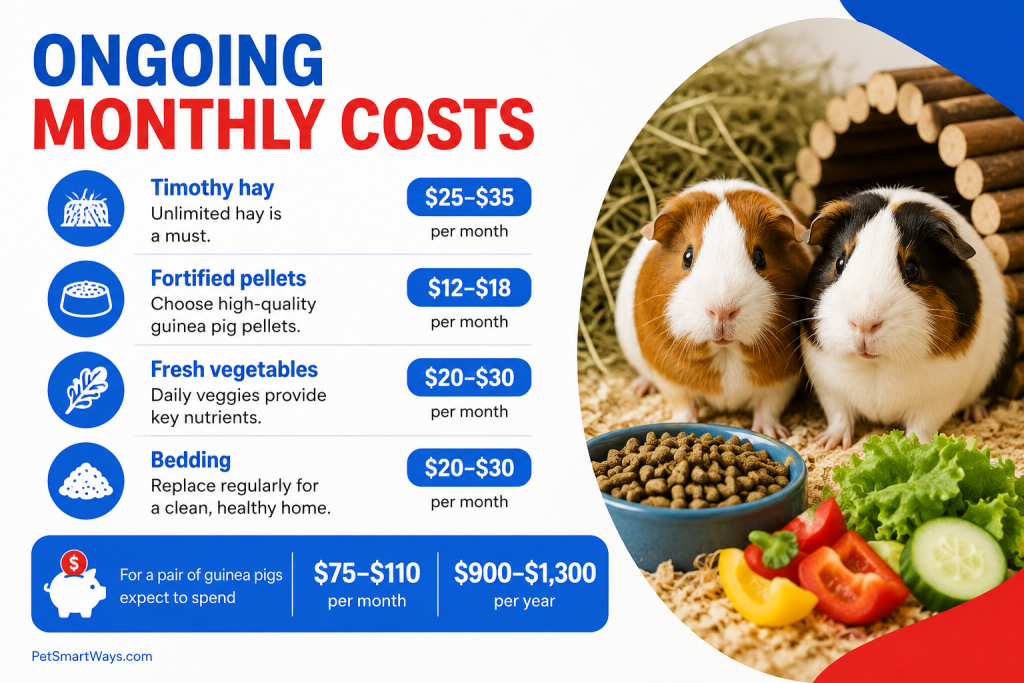
Expect about $75 to $110 a month, or $900 to $1,320 a year, before vet bills. Fleece liners cost more up front but cut bedding costs over time.
Feeding Your Guinea Pigs
PetSmart says guinea pigs eat grasses, hay, plants and greens, with pellets always available and refreshed daily. Fruit and treats should be limited to about twice a week.
Unlimited timothy hay should make up most of the diet. It wears down constantly growing teeth and keeps digestion moving.
Safe and unsafe foods
| Usually safe | Avoid |
|---|---|
| Bell peppers | Iceberg lettuce, which has little nutrition |
| Romaine and green leaf lettuce | Onions, garlic and chives |
| Cilantro and parsley, in moderation | Potatoes and potato peels |
| Cucumber | Chocolate and sugary snacks |
| Carrots and fruit, as small treats | Avocado |
Introduce new vegetables one at a time and in small amounts. Wash produce well and remove anything uneaten before it wilts.
The Vitamin C Problem
Guinea pigs can’t make their own vitamin C, so they can develop scurvy without it. Warning signs include a rough coat, swollen joints and reluctance to move.
Bell peppers are one of the best daily sources. Buy pellets in small bags, since their vitamin C breaks down within weeks of opening.

Skip vitamin drops in the water bottle. They break down in light and can make water taste bad enough that pigs drink less.
Health and Vet Care
PetSmart recommends watching any new pet closely for 30 days and seeing a vet within 14 days of purchase. Guinea pigs hide illness, so early checkups matter.
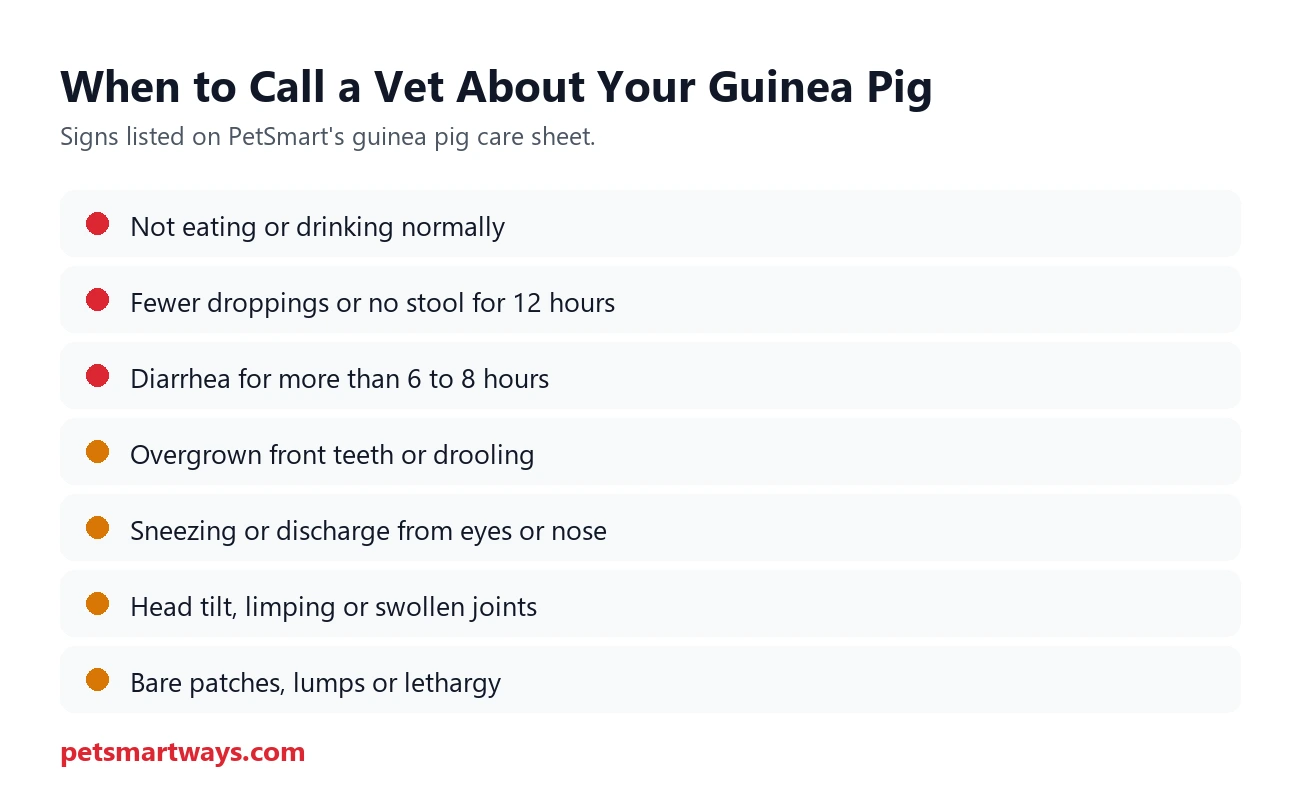
Find an exotic or small animal vet before you need one. Many general clinics don’t treat guinea pigs.
Every guinea pig PetSmart sells comes with its 14-day promise to replace or refund a pet that becomes ill. Our live pet return guide explains how it works.
Handling and Bonding
Give new guinea pigs a few quiet days to settle before handling. Sit near the cage, talk softly and offer vegetables by hand.
When you pick one up, scoop it with one hand under the chest and the other supporting its rear. Hold it close to your body and sit down so it can’t fall far.
Happy guinea pigs often squeak loudly, called wheeking, especially when they hear the fridge open. Short daily floor time in a safe, enclosed area keeps them active and curious.
Grooming and Nail Care
Guinea pig nails grow quickly and usually need trimming every few weeks. Use small animal clippers and take off just the tips to avoid the quick.
Long-haired breeds need regular brushing to prevent mats. Check teeth and ears while you groom, and see a vet if teeth look overgrown or uneven.
Picking Healthy Guinea Pigs in Store
- Bright, clear eyes and a clean nose
- A full, glossy coat without bald patches
- Clean around the rear end
- Alert and moving easily
- Eating hay and pellets normally
Ask the associate whether the pigs you like are already housed together. Buying an existing pair makes introductions much easier.
Lifespan and Commitment
PetSmart says guinea pigs live 5 to 8 years and grow up to 12 inches long. That’s a much longer commitment than a hamster.
Plan for care during holidays, too, since guinea pigs need fresh hay and vegetables every day. A trusted pet sitter or friend who knows their routine is the easiest option.
Buying vs Adopting
Rescues often have guinea pigs, including bonded pairs that come with their cage. That can remove the biggest setup cost.
Some PetSmart adoption centers include small animals. Our PetSmart adoption guide explains how to find them.
Saving on Supplies
PetSmart runs small pet deals on food, hay, bedding and habitats. Check the deals page before a big setup shop.
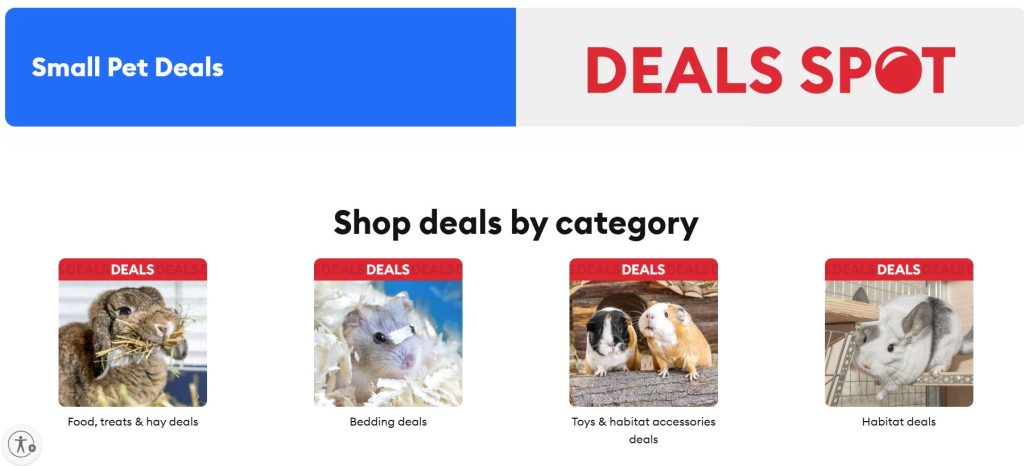
Join Treats Rewards first, since a full setup earns plenty of points. Hay and bedding work well on Autoship for steady savings.
Guinea Pigs vs Other Small Pets
| Pet | PetSmart price | Lifespan |
|---|---|---|
| Hamster | $23.99 to $25.99 | About 2 years |
| Guinea pig | $59.99 to $89.99 | 5 to 8 years |
| Chinchilla | $199.99 to $249.99 | Often 10 years or more |
See our hamster prices guide and small animals guide to compare.
Guinea Pig Questions
Can I keep one guinea pig alone?
PetSmart recommends pairs or small groups. A single pig often becomes bored and stressed.
What’s the difference between a regular and fancy guinea pig?
Fancy guinea pigs have special coat types or colors, which is why they cost more. Care needs are the same.
Do guinea pigs smell?
Not much, if you spot clean daily and change bedding every two weeks. Strong odors usually mean the cage needs cleaning or is too small.
Are guinea pigs good for kids?
They’re gentle and rarely bite, which suits older children. An adult should handle daily care and vet visits.
How often should I clean the cage?
Spot clean daily and do a full bedding change every two weeks, as PetSmart’s care sheet suggests.