PetSmart Teeth Cleaning Cost and What’s Included
PetSmart offers two very different kinds of teeth cleaning. Salon teeth brushing costs about $12, while a real dental cleaning at the Banfield hospital inside many stores usually runs $300 to $700.
The cheap one freshens breath. The expensive one treats the gum disease you can’t see.
| If you want to | Book this |
|---|---|
| Freshen breath between vet visits | Salon teeth brushing |
| Remove hardened tartar | Vet dental cleaning |
| Treat red gums or a loose tooth | Vet exam first |
| Spread the cost across the year | A Banfield wellness plan with dental |
Salon Brushing or a Vet Cleaning
Both services touch your pet’s teeth, but they work on different parts of the tooth. Brushing cleans the visible surface, while a vet cleaning reaches below the gumline where disease starts.

Think of salon brushing like brushing your own teeth. It helps every day, but it never replaces a visit to the dental hygienist.
Hardened tartar can’t be brushed off by anyone, at the salon or at home. Once it forms, only a scaling under anesthesia removes it properly.
Teeth Brushing at the Grooming Salon
PetSmart salons brush teeth as a walk-in service for about $12. Stylists use a pet toothbrush and pet-safe toothpaste, and it takes only a few minutes.
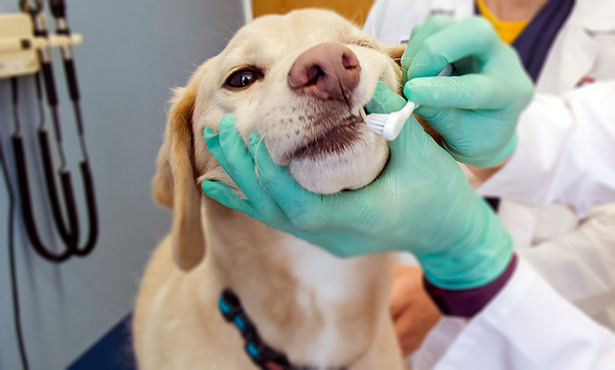
It’s also bundled into some packages. The PAWdicure Plus, at about $26, adds teeth brushing to nail and paw care.
Cat stylists can brush teeth too, though many cats won’t sit for it. Our cat grooming guide covers what cat salons offer.
If your dog is already booked for a bath, adding brushing costs little. Full package pricing is in our PetSmart grooming prices guide.
What a Banfield Dental Cleaning Includes
A professional cleaning at Banfield is a half-day medical procedure. Banfield describes each step on its pet dental care page.
- A physical exam and pre-anesthetic bloodwork to check your pet is safe to go under
- General anesthesia, with vital signs monitored throughout
- Full-mouth X-rays to find problems below the surface
- Scaling above and below the gumline, then polishing
- Recovery, followed by a talk about results and home care
Banfield doesn’t offer anesthesia-free cleanings. It says they only remove surface tartar and can leave disease under the gums untreated.
What a Dental Cleaning Costs
Banfield puts the average US dental cleaning at $300 to $700. The price climbs if your pet needs extractions or other treatment.
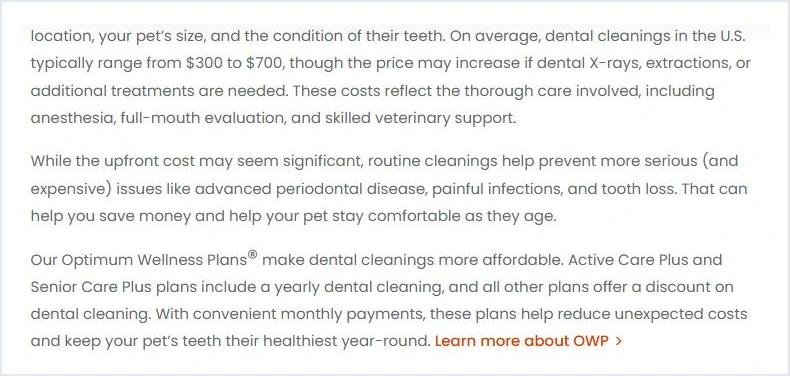
| What changes the bill | Why |
|---|---|
| Your pet’s size | Larger pets need more anesthetic and longer monitoring |
| How advanced the disease is | A healthy mouth is quicker than one with infection |
| Extractions | Priced per tooth and by how hard the tooth is to remove |
| Medication | Pain relief or antibiotics after surgery cost extra |
| Your location | City hospitals usually charge more |
Banfield’s own price lists show where real bills land. Its Portland hospital lists a professional dental cleaning at $465.95 and its Little Rock hospital at $387.95, with an office visit fee on top.
Banfield’s website has a price estimate tool that shows typical costs by zip code. Use it before you book so the final bill isn’t a surprise.
Those packages include routine bloodwork, an IV catheter and fluids, and anesthesia monitoring. Our spay and neuter cost guide shows the same hospitals’ surgery prices.
Ask for a written estimate with a high and low range. If X-rays show a tooth needs to come out, the team will usually call you before going ahead.
Wellness Plans That Include a Cleaning
Banfield’s Optimum Wellness Plans spread routine care into monthly payments. Two of them include one dental cleaning a year.
| Plan | Dental cleaning |
|---|---|
| Active Care Plus | One per year, included |
| Senior Care Plus | One per year, included |
| All other plans | Discount on cleanings |
For small breeds and pets prone to tartar, the included cleaning is often what makes a Plus plan worth it. Plans are 12-month contracts, so read the cancellation terms before signing.
Our Banfield at PetSmart guide explains plan tiers and how billing works. Routine cleanings usually aren’t covered by insurance either, as our pet insurance guide explains.
Spotting Dental Trouble Early
Lift your pet’s lip once a week and look at the back teeth and gums. It takes ten seconds and catches problems long before they hurt.

- Bad breath that doesn’t go away
- Drooling or pawing at the mouth
- Dropping food or chewing on one side
- Red, swollen or bleeding gums
- Loose, broken or discolored teeth
- Ignoring chew toys it used to love
Persistent bad breath isn’t normal, even in older dogs. It’s usually the first sign of bacteria building up under the gums.
How Gum Disease Progresses
Vets grade periodontal disease in four stages, based on how much of the tooth’s support has been lost. The earlier it’s caught, the cheaper and simpler the fix.
| Stage | What’s happening | Usual treatment |
|---|---|---|
| Stage 1 | Gingivitis, red gum edges with no bone loss | Cleaning and home care, fully reversible |
| Stage 2 | Early periodontitis, under 25% support lost | Cleaning, sometimes local treatment |
| Stage 3 | Moderate, 25 to 50% support lost | Cleaning plus possible extractions |
| Stage 4 | Advanced, over 50% support lost | Extractions are usually needed |
Only stage 1 can be fully reversed. From stage 2 onward the lost bone doesn’t grow back, so the goal becomes stopping it from getting worse.
This is why waiting costs more. A stage 1 cleaning sits near the bottom of the price range, while stage 4 often adds several extractions.
Breeds That Need Extra Dental Care
Some pets build up tartar far faster than others. Crowded teeth in small mouths trap food and bacteria.
| Higher risk | Why |
|---|---|
| Toy breeds like Chihuahuas, Yorkies and Pomeranians | Full-size teeth crowded into tiny jaws |
| Dachshunds and Greyhounds | Known for early tartar and gum disease |
| Flat-faced dogs like Pugs and Shih Tzus | Twisted or overlapping teeth |
| Flat-faced cats like Persians | Crowded teeth and hard-to-clean gaps |
If your pet is on this list, start home brushing young and book yearly vet checks. These are the pets that benefit most from a wellness plan with an included cleaning.
Cats Hide Mouth Pain
Cats rarely show that their teeth hurt. Many keep eating normally, just a little slower or on one side.
They’re also prone to tooth resorption, where a tooth breaks down from the inside. It’s painful and often invisible without X-rays, which is why full-mouth X-rays matter even more for cats.
Most cats won’t sit still for salon brushing anyway. For them, home care and yearly vet checks do far more good.
Puppy and Kitten Teeth
Puppies and kittens lose their baby teeth by about six months old. Sometimes a baby tooth doesn’t fall out, leaving two teeth crowded into one spot.
These retained baby teeth trap food and push adult teeth out of line. Vets often remove them during the spay or neuter surgery, while your pet is already under anesthesia.
Puppyhood is also the best time to get your pet used to having its mouth handled. A few seconds of gentle touching each day makes brushing much easier later.
The Day of the Procedure
A dental cleaning is a drop-off, not a quick appointment. Your pet usually goes in during the morning and comes home that afternoon.
Food is normally withheld from the night before, because anesthesia on a full stomach is risky. Your vet will tell you exactly when to stop feeding and whether water is okay.
Expect your pet to be sleepy and a little wobbly that evening. Most are back to normal by the next morning.
If teeth were removed, you’ll get pain medication and instructions for soft food. Skip hard chews and bones until the vet says the gums have healed.
When to call the vet after a cleaning
- Bleeding from the mouth that doesn’t stop
- Not eating for more than a day
- Facial swelling or pawing at the face
- Vomiting or unusual tiredness after the first evening
These are uncommon, but they’re worth a phone call the same day. Most hospitals give you a number to ring after hours.
Dental Care for Senior Pets
Older pets often have the worst teeth and the most worried owners. Skipping cleanings because of age usually means living with a sore mouth.
Banfield’s Senior Care Plus plan includes a yearly cleaning along with senior bloodwork. That screening also helps the vet plan anesthesia safely.
Home Care Between Cleanings
Banfield recommends brushing daily, or at least several times a week. Use a soft pet toothbrush or finger brush and a pet toothpaste in a flavor your pet likes.

Never use human toothpaste. Many contain xylitol or fluoride, which can be toxic to pets.
Start slowly by letting your pet lick the paste, then brush a few teeth at a time. Most pets accept a full brushing within a couple of weeks.
When brushing isn’t possible, choose chews, diets or water additives with the VOHC seal. The Veterinary Oral Health Council only awards it to products tested to reduce plaque or tartar.
Dental Products Worth Buying
PetSmart stocks plenty of dental products, but they aren’t all equally useful. Brushing still does the most, and everything else plays a supporting role.
| Product | How much it helps |
|---|---|
| Pet toothbrush and toothpaste | The most effective option when used several times a week |
| VOHC-approved dental chews | Helpful daily extra, especially for dogs that won’t be brushed |
| Dental diets | Kibble shaped to scrub teeth, useful for tartar-prone pets |
| Water additives | Mild help, mostly for breath |
| Rawhide, antlers and bones | Risky, as hard chews can break teeth |
A good rule for chews is the thumbnail test. If you can’t press a fingernail into it, it’s hard enough to crack a tooth.
Check calorie counts on daily dental chews, since they add up fast for small dogs. Our guide to the best dog food at PetSmart covers dental-friendly diets.
Ways to Lower the Bill
A dental cleaning is a big expense, but a few choices can bring it down. The biggest saving comes from not waiting.
- Book at the first sign of tartar, before extractions are needed
- Use Banfield’s zip code estimate tool to compare likely costs
- Ask for an itemized estimate and what could push it higher
- Consider a Plus wellness plan if your pet needs yearly cleanings
- Watch for offers during February, which is Pet Dental Health Month
Getting a quote from your regular vet or a local clinic is also worth it. Prices for the same procedure can vary a lot between hospitals.
Teeth Cleaning Questions
How often does my pet need a dental cleaning?
Most vets suggest a check every year, with cleanings as needed. Small breeds and pets with gum disease often need them more often.
How long does a dental cleaning take?
The cleaning itself often takes one to two hours, depending on how much work is needed. Your pet usually stays most of the day so the team can monitor recovery.
Is anesthesia safe for older pets?
Age alone isn’t a reason to skip a cleaning. Pre-anesthetic bloodwork and monitoring are there to judge each pet’s risk, so talk it through with the vet.
Can I just pay for salon brushing instead?
Only if your pet’s teeth and gums are already healthy. Brushing won’t remove tartar or treat infection below the gums.
Do all PetSmart stores have a Banfield?
No, only some stores have a vet hospital inside. Check the store locator, or see our PetSmart vet care guide for other options.
Does pet insurance pay for cleanings?
Most policies treat routine cleanings as preventive care and don’t pay for them. Some cover dental disease treatment, so check your policy wording.