
PetSmart Microchip Cost Registration and Fees
Microchipping a pet at PetSmart usually costs $25 to $70 through the Banfield hospital inside the store. That price normally covers the chip, the injection and initial registration.
The chip only works if your contact details are on file and current. Registration is the step that actually brings pets home.
| Question | Short answer |
|---|---|
| Who does it at PetSmart? | Banfield Pet Hospital, at stores that have one |
| Typical cost | $25 to $70, less with a Banfield plan |
| Does it hurt? | About like a routine vaccine |
| Earliest age | Often around 8 weeks |
| Is it GPS? | No, it only stores an ID number |
Where to Get a Microchip at PetSmart
PetSmart itself doesn’t microchip pets. The service comes from Banfield Pet Hospital, which runs clinics inside many PetSmart stores.
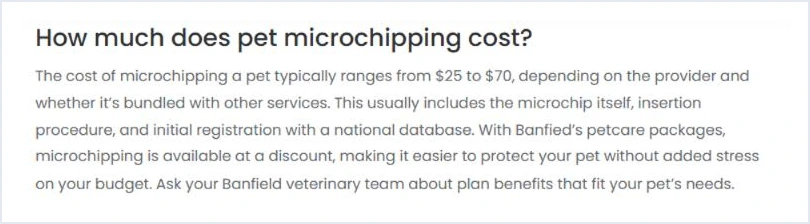
Banfield says microchipping typically costs $25 to $70, depending on the provider and whether it’s bundled with other care. Its wellness plans offer microchipping at a discount.

Some walk-in vaccine clinics at PetSmart may also offer microchips, but services vary by clinic. Call ahead and ask whether registration is included and which chip brand they use.
Our Banfield at PetSmart guide explains plans and pricing, and our vaccination clinic guide covers the walk-in clinics.
What You’re Paying For
| Part | Usually included? |
|---|---|
| The microchip | Yes |
| Implanting it | Yes |
| Initial registration | Usually, per Banfield |
| Office visit or exam | Sometimes extra, ask first |
| Premium registry membership | Optional and not required |
Ask for the total price before booking. Bundling the chip with a vaccine visit or surgery often avoids a separate exam fee.
How a Microchip Works
A microchip is about the size of a grain of rice and sits just under the skin, usually between the shoulder blades. It has no battery and no GPS, and it can’t track your pet’s location.
When a lost pet is found, a vet or shelter scans the chip to read a unique ID number. That number links to your contact details in a registry, and someone calls you.
No personal information is stored on the chip itself. Every step depends on the registry record being complete and up to date.
Why It Matters
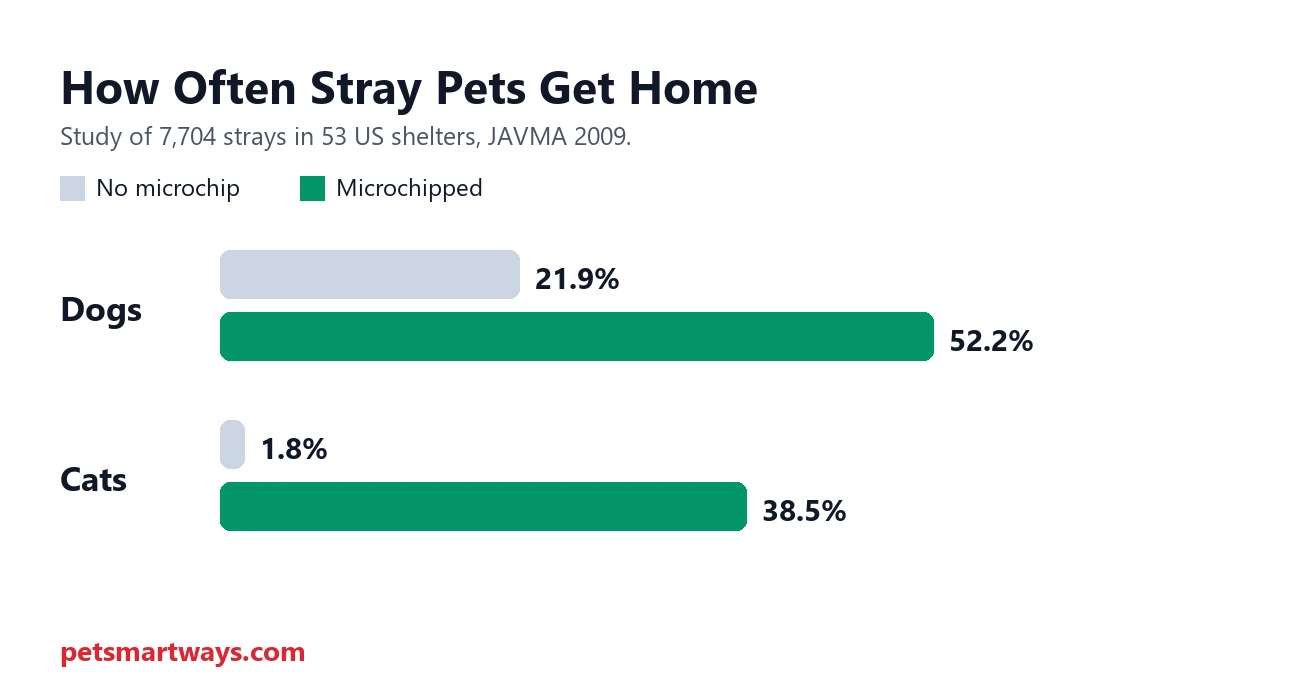
Microchips are one of the best-studied tools in shelter medicine. A study of 7,704 strays in 53 US shelters, published in JAVMA, compared chipped and unchipped pets.
| Pet | No microchip | Microchipped |
|---|---|---|
| Dogs returned home | 21.9% | 52.2% |
| Cats returned home | 1.8% | 38.5% |
The cat numbers stand out. An unchipped stray cat had under a 2% chance of getting home, which is why chips matter even for indoor cats.
Why Chips Fail
The same study looked at chipped pets that still didn’t get home. Nearly every failure came down to paperwork, not the chip.
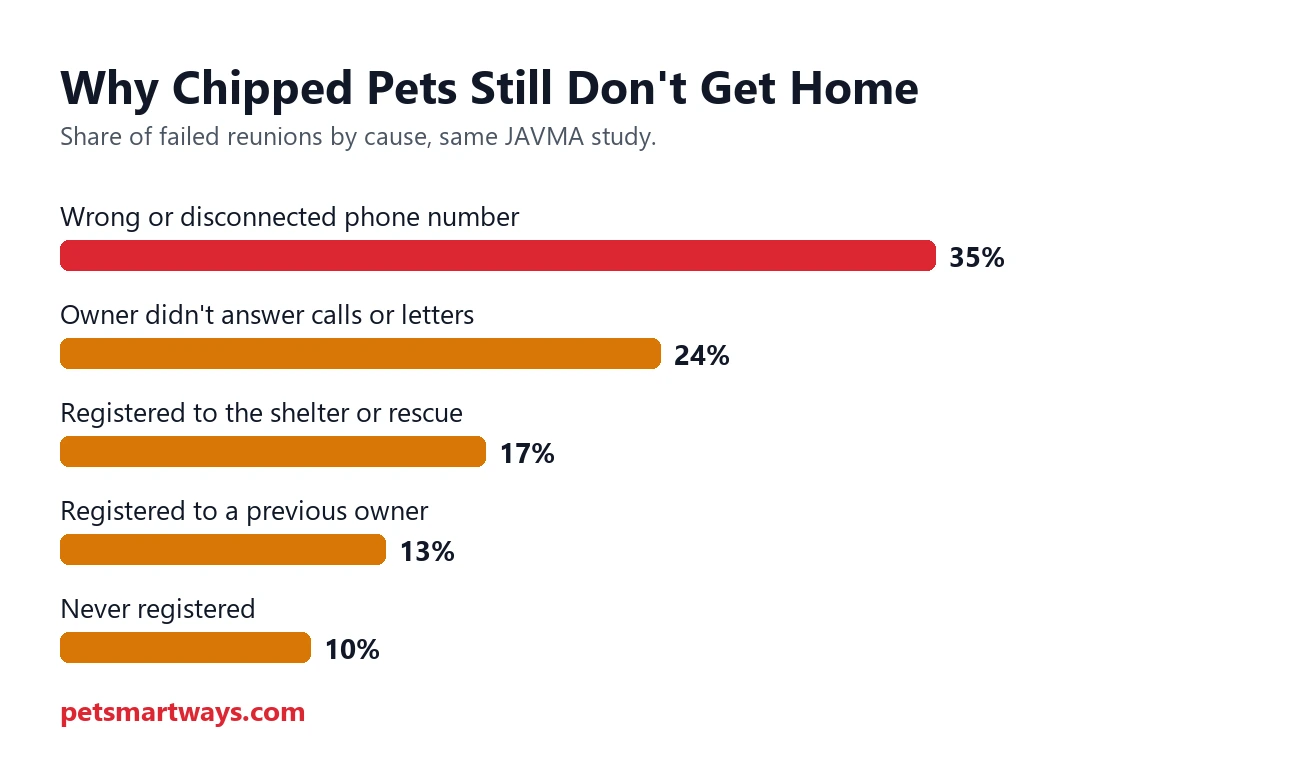
A wrong or disconnected phone number was the biggest problem, followed by owners who didn’t respond. Chips registered to a shelter or a previous owner also left pets stranded.
Registering Your Pet’s Chip
Banfield says registering the chip is just as important as implanting it. You’ll get a form or instructions after the procedure.
- Keep the paperwork with your pet’s chip number and brand
- Register online the same day with your phone, email and address
- Add an emergency contact who lives somewhere else
- Check the record with the AAHA Universal Pet Microchip Lookup
- Update your details every time you move or change numbers
Use the AAHA Universal Pet Microchip Lookup to confirm your chip shows up correctly. It searches many registries at once.
Some registries push paid memberships, but basic registration doesn’t need to cost extra. A free, current record works just as well as a paid one.
Adopted Pets and Transfers
Most rescue pets are chipped before adoption. You don’t need a new chip, but you do need to transfer the registration into your name.
Contact the registry listed on your adoption paperwork and update the record that week. Our PetSmart adoption guide covers the rest of the first-week checklist.
Chip Frequencies and Travel
Not all chips use the same frequency. The international standard is 134.2 kHz under ISO 11784 and 11785, while some older US chips use 125 or 128 kHz.
Most US shelters use universal scanners that read all three. If you might travel abroad, ask for an ISO chip, since many countries require one for entry.
Does It Hurt?
Banfield describes microchipping as quick and similar to a routine vaccine. It doesn’t need anesthesia, and most pets barely react.
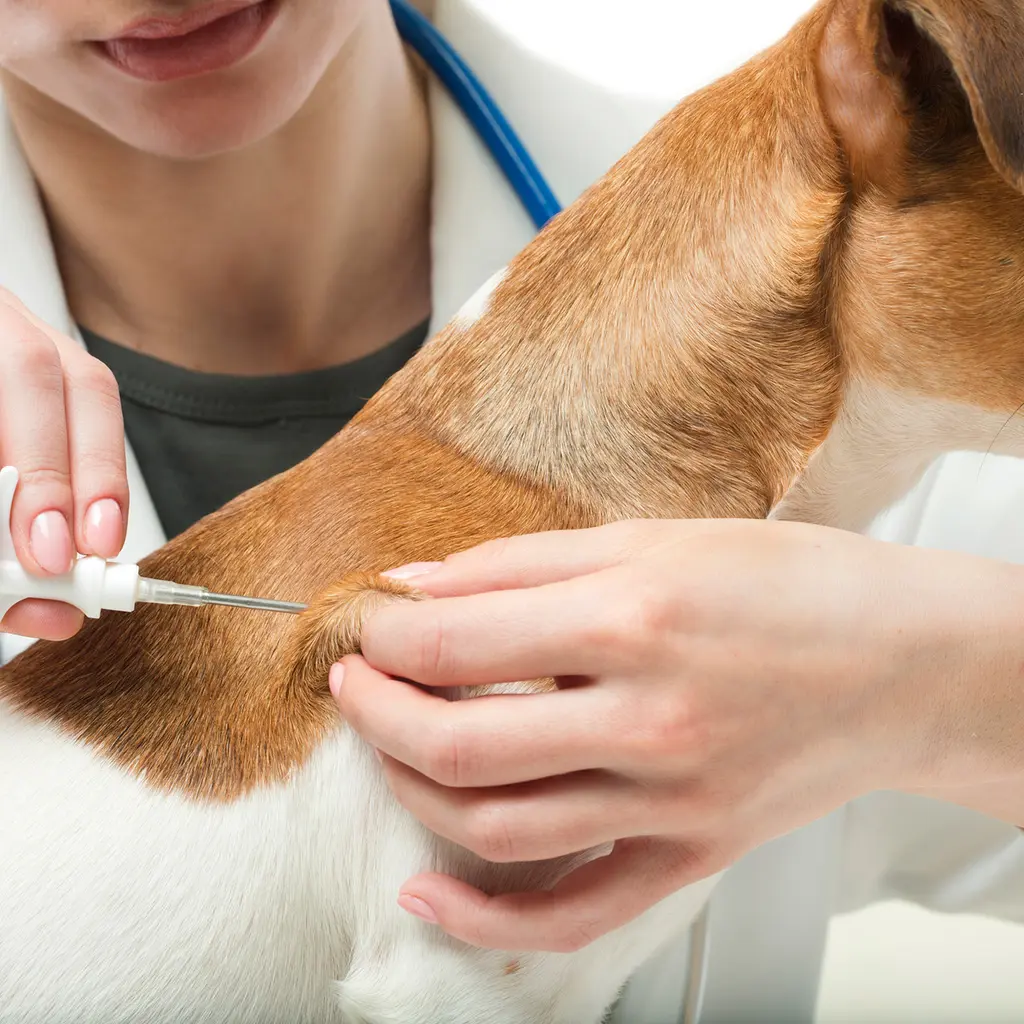
Mild soreness or swelling at the injection site is possible. Rare problems like chip migration or allergic reactions are uncommon and usually not serious.
Banfield notes that research hasn’t shown a proven link between microchips and cancer. The chip stores only an ID number, not your personal data.
Best Time to Microchip
Pets can be chipped at almost any age, but around 8 weeks is common. Many owners do it during spay or neuter surgery while the pet is already asleep.
Our spay and neuter cost guide shows Banfield’s surgery prices if you want to combine the two.
Check the Chip Every Year
Chips can drift over time, often down a shoulder or toward the chest. A scan that only covers the usual spot can miss one that has moved.
Ask your vet to scan your pet at each annual visit. It confirms the chip still reads and that the number still leads to you.
Keep the Record Current Through Life Changes
Most chip failures happen years after the implant, when life moves on and the registry doesn’t. Update the record at each of these moments.
| When this happens | Update this |
|---|---|
| You move | Home address and, if needed, phone number |
| You change phone numbers | Primary number and any backup numbers |
| You rehome your pet | Transfer the record to the new owner |
| Your emergency contact changes | Their name and number |
| You travel or board your pet | Add a temporary contact if possible |
Set a yearly reminder to log in and check the record. It takes two minutes and could save weeks of searching.
Collar Tags Still Matter
A chip needs a scanner, but a tag with your phone number can be read by any neighbor. Many lost pets are found within a few blocks and returned before ever reaching a shelter.
Use both a chip and a tag. Many tags also show a note that the pet is microchipped, which prompts finders to get a scan.
Microchip or GPS Tracker?
These do different jobs, so many owners use both. A chip is permanent ID that works even if the collar comes off.
| Microchip | GPS tracker |
|---|---|
| Permanent and can’t fall off | Rides on a collar that can slip |
| No battery to charge | Needs regular charging |
| Doesn’t show location | Shows live location |
| One-time cost | Often a monthly subscription |
For escape artists and outdoor cats, a chip plus a tracker covers both the worst case and the everyday open gate.
If Your Pet Goes Missing
Act fast, since the first hours matter most. A chip helps only if shelters can reach you.
- Call your microchip registry and report your pet as lost
- Make sure your phone number on the record is correct
- Visit nearby shelters in person every day or two
- Post a clear photo on local lost pet groups and neighborhood apps
- Put up flyers with your number around the area where your pet went missing
- Leave a worn item of clothing outside your home
Bring your pet’s photo and chip number when you visit shelters. Staff can check new arrivals against your details.
Chipping Cats, Rabbits and Other Pets
Microchips aren’t just for dogs. Cats, rabbits, ferrets and some birds can be chipped too.
Indoor cats benefit most, since few wear collars and the study above showed how rarely unchipped cats get home. For rabbits, birds and other small pets, ask a vet who treats that species.
If You Find a Lost Pet
Take the pet to a local vet, animal shelter or animal control office. Banfield notes they can scan for a chip at no charge.
The scan reveals the chip number, which can be searched in a national registry. From there, the chip company can help contact the owner.
Cheaper Ways to Microchip
| Where | Why consider it |
|---|---|
| Banfield at PetSmart | Convenient, and discounted with a wellness plan |
| Your regular vet | Can combine with a checkup you already need |
| Shelters and humane societies | Often run low-cost chip clinics open to the public |
| Community events | Some county events chip pets free or for a small fee |
August 15 is Check the Chip Day, a reminder from vet groups to confirm your pet’s registry details. It’s a good date to set as a yearly reminder.
Common Microchip Myths
| Myth | Reality |
|---|---|
| A chip tracks my pet’s location | It only stores an ID number and has no GPS |
| The chip holds my personal data | Your details live in a registry, not on the chip |
| Indoor pets don’t need one | Indoor pets slip out, and cats rarely wear collars |
| Chips cause cancer | Banfield notes research shows no proven link |
| Once chipped, I’m done | The record needs updating whenever details change |
Travel, Boarding and Moving
Many countries require an ISO chip before a pet can enter, often implanted before rabies shots. Check the destination’s rules months ahead.
Moving across the country is the most common time records go stale. Update the registry the same week you get new keys.
Pets are more likely to slip out during a move, when doors are propped open. Keep them in a closed room or at a boarding facility on moving day.
If your pet boards while you travel, our boarding guide covers what PetsHotel needs.
Microchip Questions
How long does a microchip last?
Chips are designed to last a pet’s lifetime. They have no battery to wear out.
Can I update my details for free?
Most registries let you update your contact information online. Check with the registry that holds your pet’s record.
Is microchipping required by law?
Some areas require it, and a chip can help show ownership. Check your local rules.
Can I microchip my pet at home?
No, a chip should be implanted by a vet or trained professional. Correct placement and a sterile needle matter.
What if the vet can’t find my pet’s chip?
Ask for a full-body scan, since chips can migrate. If it still can’t be found or read, your vet can implant a new one and you can register that number.
Do shelters scan every pet?
Most shelters and vets scan incoming strays for a chip. Scanning is free for found pets.
Does a microchip replace a rabies tag?
No, many areas still require a rabies tag and a pet license. A chip adds permanent ID on top of those.
Should I tell my groomer or boarding staff about the chip?
It helps to note the chip number on your pet’s records at any service provider. If your pet ever slips away from them, they can share it with shelters right away.
Can a chip be removed?
It’s possible, but rarely needed. Talk to your vet if you have concerns about your pet’s chip.