
Does PetSmart Sell Puppies?
No, PetSmart doesn’t sell puppies, and it never has. In 1994, PetSmart’s founders pledged not to sell dogs or cats and invited local shelters to bring adoptable pets into stores instead.
You can still meet puppies at PetSmart through rescue adoption events. Here’s how that works, which pets PetSmart does sell and the safest ways to find a puppy.
Why PetSmart Doesn’t Sell Puppies or Kittens
PetSmart Charities traces its start to that 1994 pledge. Rather than stock puppies, PetSmart gives store space to local rescues so they can find homes for shelter pets.
Stocking puppies across hundreds of stores would mean relying on high-volume commercial breeders. Many cities and states now restrict or ban retail sales of dogs and cats for the same reason.
The policy also applies to kittens. PetSmart’s adoption centers are the way to bring home a cat or dog from the store.
How Adoption Works at PetSmart
Local shelters and rescue groups run the adoptions, set the fees and screen adopters. PetSmart provides the space, and PetSmart Charities supports the program.

Many stores have adoption centers, often for cats, and dogs usually come to in-store adoption events. PetSmart’s site showed more than 11.7 million adoptions in October 2026.
Fees and rules depend on the rescue, so ask what’s included before you apply. Our PetSmart adoption guide walks through the process, and our cat adoption guide covers kittens and cats.
National Adoption Week
PetSmart Charities holds National Adoption Week events, including October 19 to 25, 2026. Stores fill with partner rescues, giving you a chance to meet many adoptable pets at once.
Arrive early on event days, since popular dogs and puppies are often adopted quickly. Bring ID and be ready to answer questions about your home.
What PetSmart Does Sell
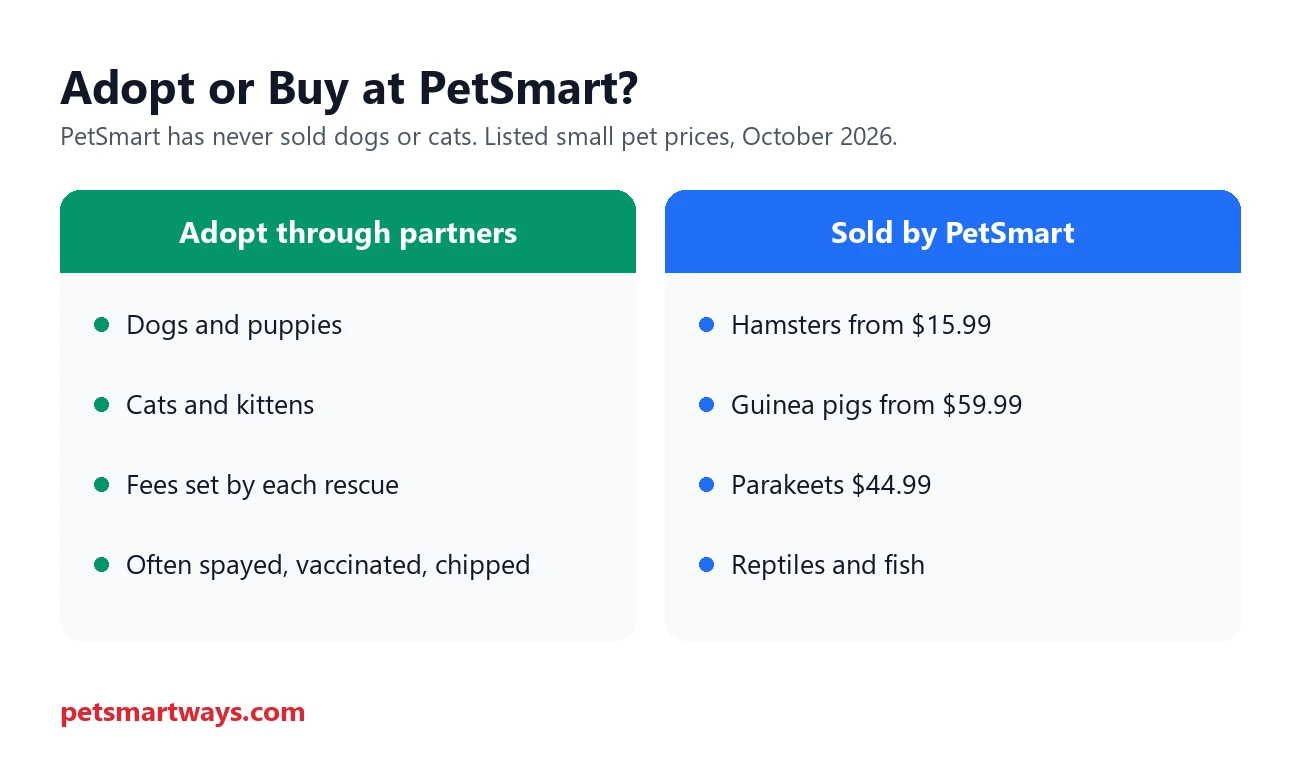
| Animal | Available at PetSmart | Listed price |
|---|---|---|
| Dogs and puppies | Adoption only | Set by the rescue |
| Cats and kittens | Adoption only | Set by the rescue |
| Hamsters | Sold in store | $15.99 to $25.99 |
| Guinea pigs | Sold in store | $59.99 to $89.99 |
| Parakeets | Sold in store | $44.99 |
| Leopard geckos to ball pythons | Sold in store | $34.99 to $99.99 |
| Fish | Sold in store | $0.29 to $29.99 |
Prices are PetSmart’s listed prices from October 2026. Each guide covers setup and care, including hamsters, birds, reptiles, fish and small animals.
Where to Find a Puppy
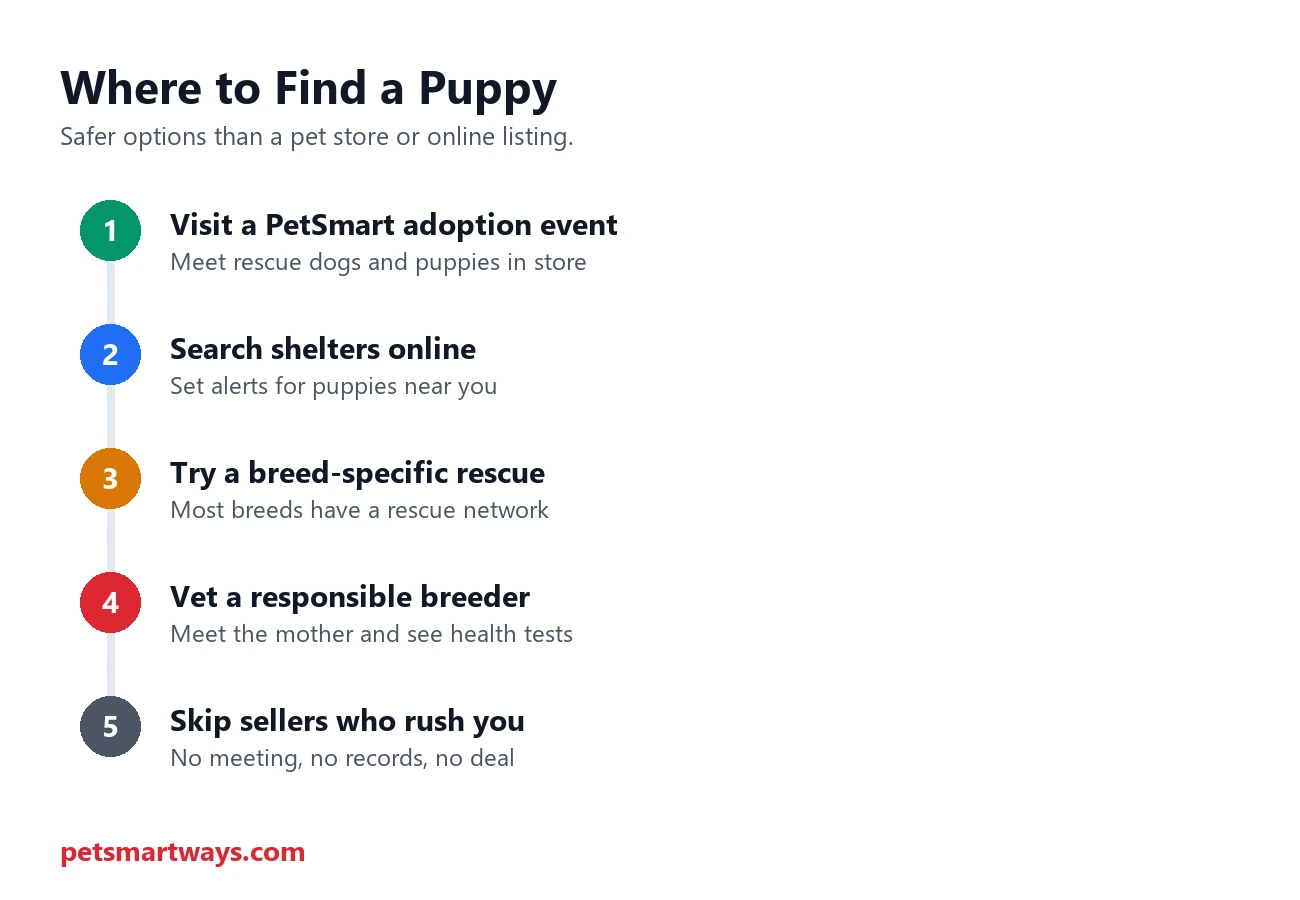
Puppies do show up at shelters and rescues, but they’re often adopted within days. Setting search alerts on adoption sites helps you see them first.

Breed-specific rescues are a good route if you want a certain breed. Foster-based rescues can also tell you how a puppy behaves in a real home.
Choosing a Responsible Breeder
- You can visit and meet the mother dog
- Health testing for the breed’s known problems is shared openly
- The breeder asks you questions about your home and lifestyle
- A written contract promises to take the dog back if needed
- Puppies stay with the mother until at least 8 weeks
Walk away from anyone who wants to meet in a parking lot, ships puppies unseen or always has several litters ready. Those are signs of a broker or puppy mill.
Avoiding Online Puppy Scams
Puppy scams are common online. Scammers post photos of cute puppies, ask for a deposit, then add fake shipping or insurance fees.
Never pay for a puppy you haven’t met in person, and avoid sellers who only accept gift cards or wire transfers. A real breeder or rescue will be happy to show you the dog.
Questions to Ask the Rescue
- How old is the puppy, and what breeds might be in the mix?
- Which vaccines, deworming and vet care has it had?
- Is it spayed or neutered, or is that required later?
- How does it act with kids, other dogs and cats?
- What does the adoption fee include, and is there a return policy?
Good rescues answer openly and ask you questions too. That two-way screening helps make the match last.
Consider an Adult Dog
Puppies are cute but take months of potty training, chewing and sleepless nights. A young adult dog often arrives calmer and partly trained.
Adult dogs’ size, energy and personality are already clear, so there are fewer surprises. Many rescues have dogs from 1 to 3 years old waiting for homes.
Adoption vs. Breeder Costs
| Rescue adoption | Responsible breeder | |
|---|---|---|
| Upfront cost | An adoption fee set by the rescue | Often much higher |
| Spay or neuter | Often included | Usually extra |
| First vaccines | Often included | Usually some, then more due |
| Microchip | Often included | Sometimes |
| Breed certainty | Mixed breeds are common | Known breed and lineage |
Whichever route you choose, food, supplies, training and vet care cost far more than the purchase price over the dog’s life.
Budgeting for a New Puppy
Plan for vaccines, a microchip, spay or neuter surgery if not already done, and yearly checkups. PetSmart’s vaccination clinics and microchip options can lower those costs.
Training is another early expense worth planning for. PetSmart’s puppy classes cost $149 for six weeks.
Pet insurance can help with surprise vet bills. Our pet insurance guide explains PetSmart’s Healthy Paws plan.
PetSmart Services for Your New Puppy
Once your puppy is home, PetSmart can help with grooming, training and supplies. Puppy grooming packages are 30% off adult prices through 5 months, as our grooming prices guide explains.
Puppies can join PetSmart’s training classes from 10 weeks old. Early classes help with socialization, nipping and leash manners.
Treats Rewards points add up quickly on food, toys and services in the first year. Sign up before your first big shopping trip, as our Treats Rewards guide explains.
Getting Ready for Your Puppy
- A crate and a soft bed
- Food and water bowls
- Puppy food suited to your dog’s size
- A collar, ID tag and leash
- Chew toys and training treats
- Enzyme cleaner for accidents
PetSmart sells all of these in store and online. Buy the basics before your puppy comes home so the first days are calm.
Puppy-Proofing Your Home
Puppies explore with their mouths, so pick up shoes, cords and small objects before your puppy arrives. Store cleaning products and medicines up high.
Use baby gates to block stairs and off-limits rooms. Keep trash cans covered and food off low counters.
The First Week Home
Keep the first few days quiet, with a regular schedule for meals, potty breaks and sleep. Too many visitors can overwhelm a new puppy.
Book a vet visit within the first week, even if the rescue already gave vaccines. Bring any records the rescue provided.
Start simple training right away, like name recognition and sit. Short, happy sessions build good habits early.
Puppy Questions
Has PetSmart ever sold puppies?
No. PetSmart’s founders pledged in 1994 not to sell dogs or cats in stores.
Can I adopt a puppy at PetSmart?
Yes, through rescue partners at in-store adoption events. Puppies are often adopted quickly, so check event dates.
Does PetSmart sell kittens?
No. Kittens and cats are available through adoption centers and events run by rescue partners.
How much does it cost to adopt a puppy at PetSmart?
Each rescue sets its own fee. Ask what’s included, such as vaccines, a microchip and spay or neuter surgery.
Can I take a puppy home the same day?
It depends on the rescue. Many require an application, and some do a home check before approval.
Do PetSmart adoption pets come with vaccines?
Many rescues include age-appropriate vaccines, deworming and a microchip in the fee. Ask the rescue for the pet’s records before you sign.
Can I bring my dog to meet a new puppy?
Some rescues arrange a meet-and-greet with your current dog. Ask about it when you apply.
Does Petco sell puppies?
Petco also focuses on adoption rather than puppy sales. Check with your local store for current events.
What pets can I buy at PetSmart?
Small animals like hamsters and guinea pigs, birds, reptiles, amphibians and fish.