
PetSmart Fish & Aquarium Guide
PetSmart sells freshwater fish from 29 cents for a comet goldfish to about $30 for a GloFish angelfish, plus tanks, filters, heaters and plants. Every live fish comes with a 14-day promise, and stores test your aquarium water for free.
This guide covers what PetSmart stocks, what fish cost, and how to set up a first tank with its products. It also explains the current deals and what to watch for as a beginner.
What PetSmart Sells for Aquariums
PetSmart’s fish section is split into tanks, stands, LED lights, filters, heaters, water conditioners, live plants, ornaments and gravel. You can buy most supplies online, while live fish are bought in store.

The live fish category listed 176 options in October 2026. That count includes fish, shrimp, crabs and other aquatic pets.
Fish Prices at PetSmart
| Fish | Listed price |
|---|---|
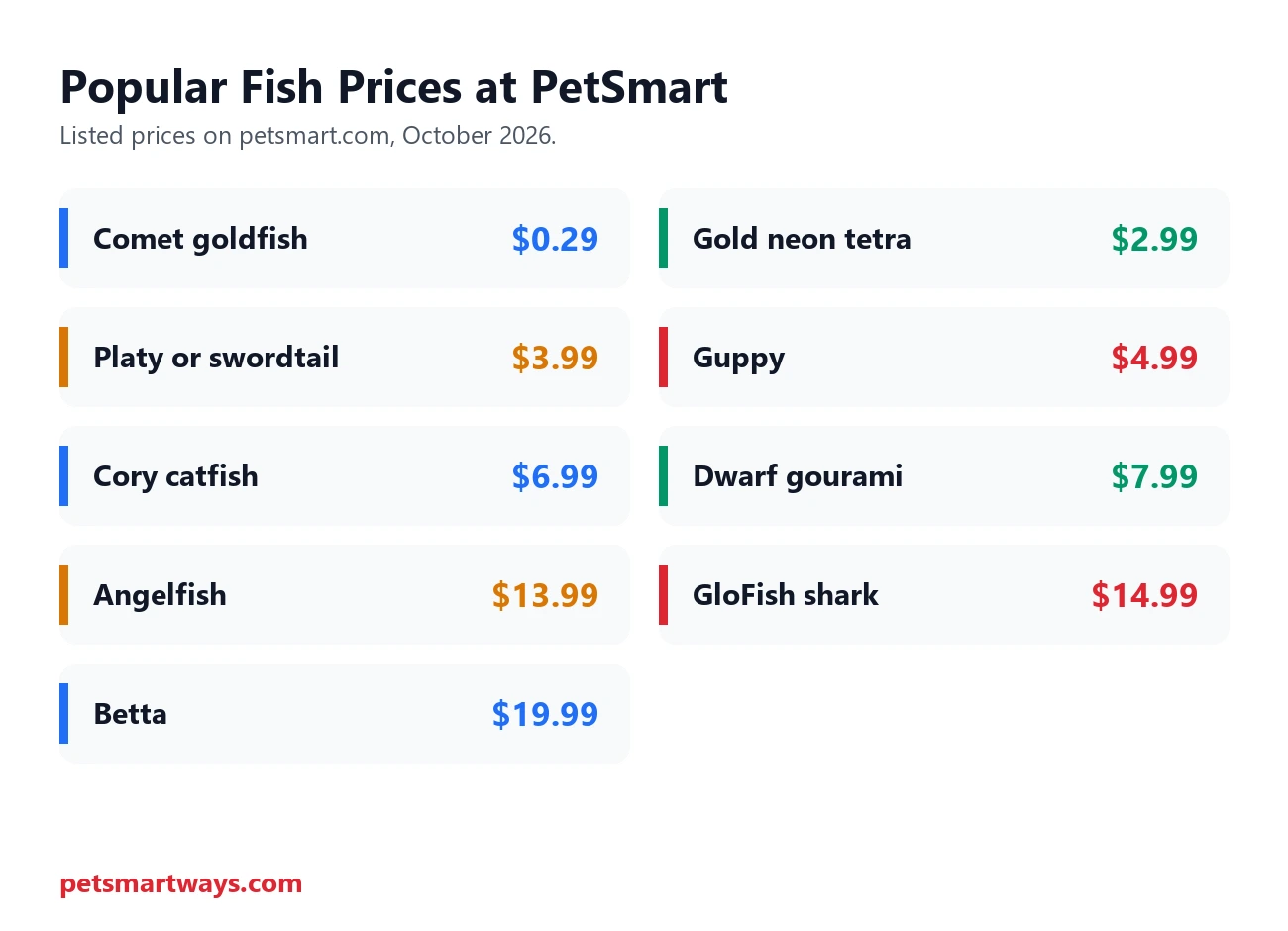
| Comet goldfish or rosy red minnow | $0.29 |
| Gold neon tetra, checker barb, peppermint platy | $2.99 |
| Swordtails, platies, assorted gourami | $3.99 |
| Guppies | $4.99 |
| Lyretail molly | $5.49 |
| Tiger barb or rosy barb | $5.99 |
| Sailfin cory catfish | $6.99 |
| Dwarf or honey gourami, African cichlids | $7.99 |
| Koi angelfish | $13.99 |
| GloFish sharks and balloon belly ram | $14.99 |
| Bettas | $19.99 |
| GloFish angelfish | $29.99 |
Prices can differ in store, and not every store carries every fish. Call ahead if you want a specific species.
Current Fish and Tank Deals
Through November 1, 2026, PetSmart offered buy 4, get the 5th free on all community fish and GloFish in store. Essentials aquarium starter kits of 10 gallons and under were 50% off.
Treats members could also earn 25X points on Marineland and Aqueon open-glass aquariums. Our PetSmart coupons guide lists more ways to save.
Freshwater Fish for Beginners
Freshwater community fish make up most of PetSmart’s selection. Platies, guppies, mollies, swordtails, tetras and cory catfish are hardy and get along in groups.

Cichlids are colorful but can be territorial, so they need their own setup. Ask an associate which fish can share a tank before you buy.
Schooling fish like tetras and corys feel safest in groups of six or more. Buying a few at a time also helps your filter keep up.
Goldfish Need More Space Than You Think
Comet goldfish cost just 29 cents, but PetSmart’s own listing rates them as intermediate fish needing a 20-gallon tank. They grow large and produce a lot of waste.
Goldfish also prefer cooler water than tropical fish, so they shouldn’t share a heated community tank. A bowl isn’t a suitable long-term home.
Bettas
Bettas cost $19.99 at PetSmart in most colors. Males fight each other, so keep one male per tank.
They’re tropical fish and need a heater and gentle filter, not an unheated cup or bowl. A tank of 5 gallons or more gives them room and steadier water.
Saltwater Fish
We didn’t find saltwater fish among PetSmart’s online live fish listings in October 2026. If you want marine fish like clownfish, ask your local store or try a saltwater specialist.

Reef tanks need extra gear like salt mix, protein skimmers and stronger lighting. They also take more testing and experience than a freshwater tank.

Many keepers start with freshwater and move to a larger or saltwater tank later. Learning on a simple setup first makes the jump much easier.
Shrimp, Crabs and Other Tank Pets
PetSmart’s aquatic list goes beyond fish. Vampire crabs cost $9.99 and hermit crabs $6.39, and stores often carry shrimp and snails too.
Vampire crabs need land and water areas, while hermit crabs live on land and need a heated, humid tank. Check each animal’s care sheet before mixing it with fish.
Choosing Tankmates
| Fish | Good tankmates | Avoid with |
|---|---|---|
| Guppies and platies | Corys, tetras, mollies | Large or nippy fish |
| Neon and other tetras | Corys, rasboras, small gouramis | Angelfish when tetras are small |
| Betta | Corys or snails in larger tanks | Other male bettas, fin nippers |
| Goldfish | Other goldfish | Tropical fish |
| African cichlids | Other African cichlids | Peaceful community fish |
Fish that need the same temperature and water type do best together. When in doubt, ask an associate before you buy.
Tanks and Starter Kits
A starter kit bundles a tank, filter, light and often a heater, so the parts are sized to work together. Kits are a simple first purchase for beginners.
Bigger tanks are easier to keep stable, because water changes in temperature and chemistry more slowly. A 20-gallon tank leaves more room for mistakes than a 5-gallon.
Inspect any tank in store for chips or cracks before you buy. Put it on a stand made for aquariums, since a filled tank is very heavy.
Filters, Heaters and Lights
| Equipment | What it does | Tip |
|---|---|---|
| Filter | Removes waste and houses helpful bacteria | Pick one rated for your tank size |
| Heater | Keeps tropical fish warm | Use with a thermometer |
| LED light | Shows off fish and grows plants | Run 8 to 10 hours a day on a timer |
| Water conditioner | Removes chlorine and chloramine from tap water | Use at every water change |
Tropical fish generally do best in the mid to upper 70s Fahrenheit. A heater with a thermometer keeps the temperature steady day and night.
Gravel, Plants and Decor
PetSmart sells gravel, sand, live plants, rocks, driftwood and ornaments. Rinse gravel before adding it, or the water will turn cloudy.
Live plants absorb waste and give fish places to hide. Easy plants like anubias and java fern grow well under basic LED lights.
Setting Up Your First Tank

- Choose a tank, ideally 20 gallons, and a sturdy stand
- Add a filter rated for the tank size
- Install a heater, thermometer and light
- Rinse and add gravel, then plants and decor
- Fill with conditioned water and run everything
- Cycle the tank before adding fish
Setup takes an afternoon, but cycling takes weeks. Plan your fish purchase for after the tank is ready.
Cycling Before You Add Fish
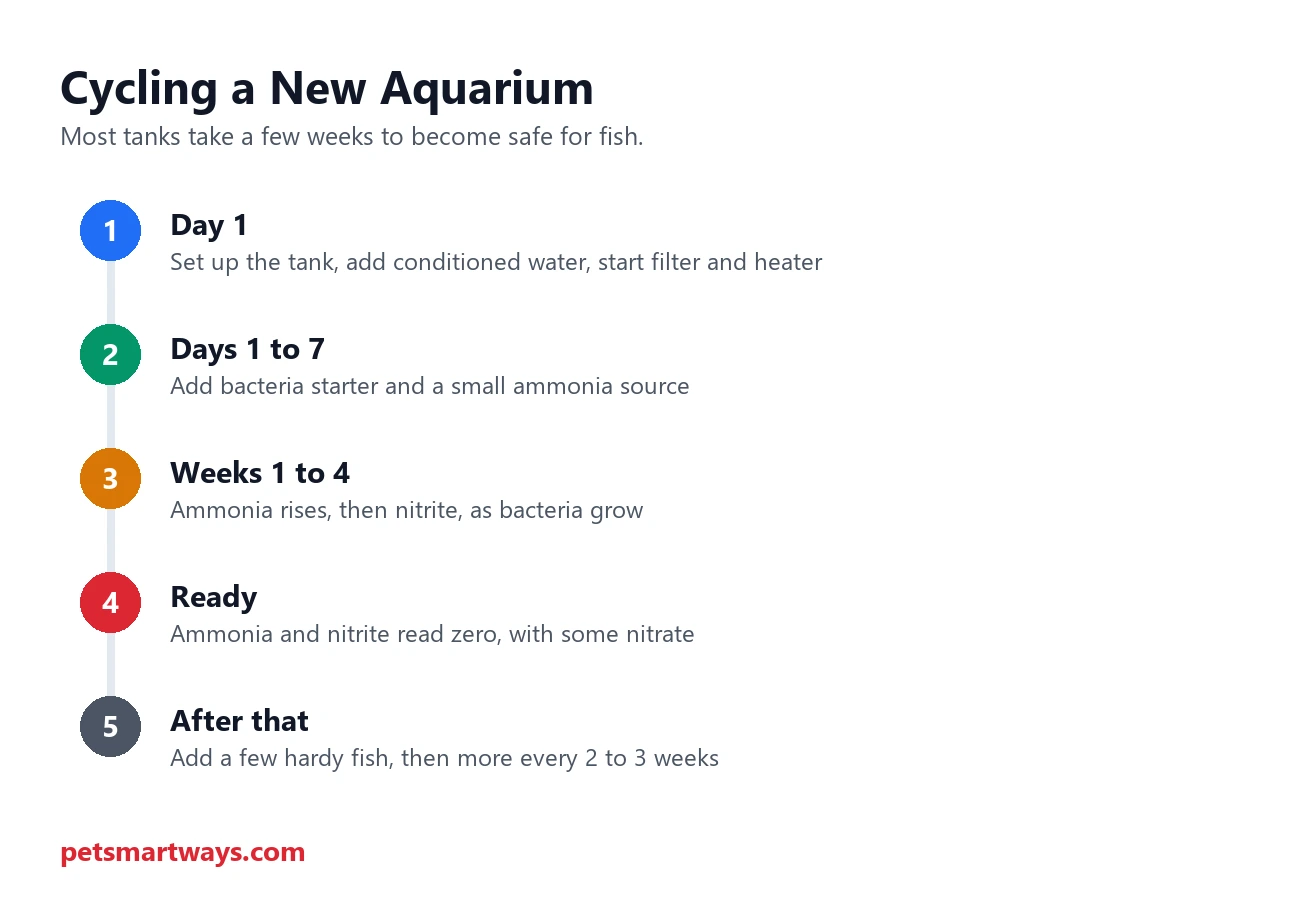
Cycling grows bacteria that turn toxic ammonia into less harmful nitrate. Without it, fish waste builds up and can poison new fish within days.
PetSmart stores test aquarium water for free. Bring a sample every week or so while the tank cycles to track ammonia and nitrite.
Stocking Slowly
Start with a few hardy fish, then add more every two to three weeks. Each new group gives the bacteria time to catch up.
Overcrowding is one of the most common beginner mistakes. Research adult sizes, not just the size in the store tank.
Picking Healthy Fish in Store
Look at the whole store tank, not just the fish you want. One sick fish can mean others in that tank are sick too.
- Fish swim normally and respond to movement
- Fins are spread, not clamped or torn
- No white spots, fuzz or cloudy eyes
- No dead fish in the display tank
Ask the associate to net the fish you choose. Point out a specific fish rather than taking whichever one gets caught.
Bringing New Fish Home
Go straight home so the bag doesn’t get too hot or cold. Float the sealed bag in your tank for about 15 to 20 minutes to match the temperature.
Add a little tank water to the bag a few times, then net the fish into the tank. Don’t pour store water into your aquarium.
Keep the lights low for the rest of the day and skip feeding until the next morning. New fish often hide at first.
Water Testing and Care
PetSmart sells test strips and liquid kits for ammonia, nitrite, nitrate and pH. Free in-store testing is a handy backup.
Change 10 to 25 percent of the water every week or two, using conditioned tap water. Clean the filter in old tank water so you don’t kill the bacteria.
Ongoing Costs to Plan For
After setup, the main costs are fish food, water conditioner, filter cartridges and test kits. Electricity for the heater, filter and light adds a little each month.
Buying food and conditioner in larger sizes lowers the cost per use. Treats Rewards points add up on these repeat buys, as our Treats Rewards guide explains.
Heavy items like gravel and large tanks can be awkward to carry. Our delivery guide covers same-day delivery and pickup options.
PetSmart’s 14-Day Fish Promise
If a fish gets sick within 14 days, or you’re not satisfied for any reason, PetSmart will replace it or refund the price. Bring your receipt and a water sample.
The water test helps staff see what went wrong before you restock. Our fish return policy guide covers every step.
Caring for Fish While You Travel
Healthy adult fish can usually go a few days without food. For longer trips, use an automatic feeder or ask someone to feed small amounts.
Do a water change and filter check a few days before you leave, not the day before. That gives you time to fix any problem.
Common Beginner Mistakes
- Adding fish the same day the tank is set up
- Buying too many fish at once
- Overfeeding, which pollutes the water
- Mixing goldfish with tropical fish
- Replacing all the filter media at the same time
Feed only what your fish eat in a minute or two, once or twice a day. Leftover food breaks down into ammonia.
Fish and Aquarium Questions
How much are fish at PetSmart?
Listed prices range from $0.29 for comet goldfish to $29.99 for GloFish angelfish. Most community fish cost $3 to $8.
Does PetSmart test aquarium water?
Yes, stores test water for free. Bring a clean sample from your tank.
Does PetSmart sell saltwater fish?
We didn’t find any in the online listings. Ask your local store.
What size tank should a beginner buy?
A 20-gallon tank is a good start. It stays more stable than a small tank.
Can I buy fish online from PetSmart?
Live fish are bought in store. Supplies like tanks, filters and food can be ordered online.
How long should a new tank run before adding fish?
Usually a few weeks, until ammonia and nitrite test at zero.
Do I need a heater for my fish?
Tropical fish like bettas, guppies and tetras need one. Goldfish and minnows usually do fine without a heater at room temperature.
Can I return a fish to PetSmart?
Yes, within 14 days with a receipt. PetSmart replaces the fish or refunds the price.
More Fish Guides
For more detail on equipment, see our fish tank guide. If you’re shopping for other pets too, our small animals guide covers prices and care.