

PetSmart Hamster Buying Guide & Prices 2026
PetSmart hamsters cost $23.99 for dwarf breeds and $25.99 for Syrians. The habitat costs far more than the hamster, and PetSmart’s own care sheet sets a higher bar than most starter cages meet.
Before you buy
- Every hamster should live alone, including dwarfs
- Plan for a solid-floored home of 350 to 450 square inches or more
- Hamsters live about 2 years
- PetSmart’s 14-day guarantee covers every hamster it sells
Hamster Prices at PetSmart
PetSmart lists seven hamster types online. Prices are the same nationwide, though stock varies by store.
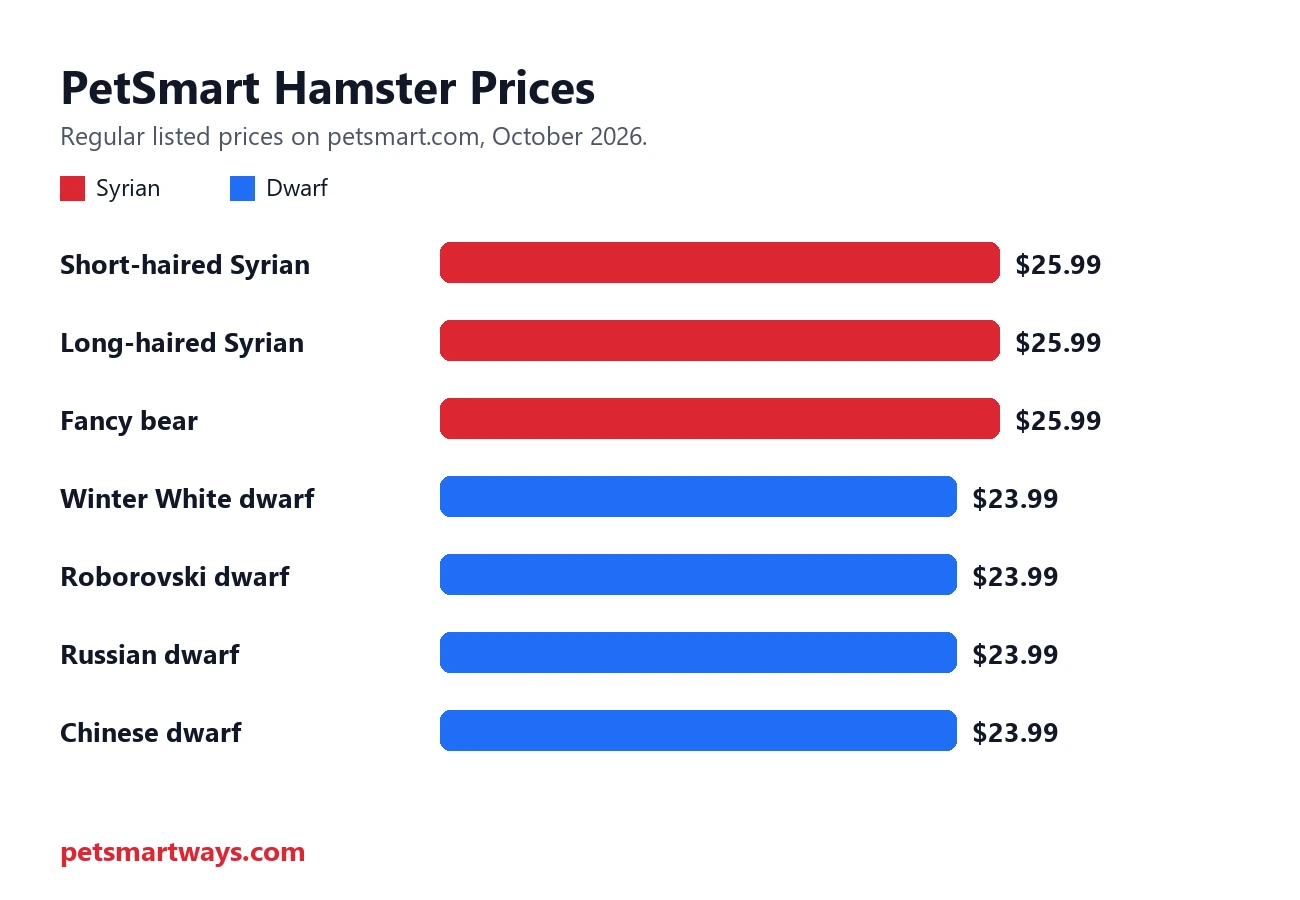
| Hamster | Type | Price |
|---|---|---|
| Short-haired | Syrian | $25.99 |
| Long-haired | Syrian | $25.99 |
| Fancy bear | Syrian | $25.99 |
| Winter White | Dwarf | $23.99 |
| Roborovski | Dwarf | $23.99 |
| Russian | Dwarf | $23.99 |
| Chinese | Dwarf | $23.99 |
PetSmart often runs hamster sales, and in October 2026 it offered 20% off hamsters in store through November 1. Check our PetSmart coupons guide for current offers on supplies.
Syrian Hamsters
Syrians are the largest pet hamsters, growing up to about 7 inches. Short-haired, long-haired and fancy bear hamsters are all Syrians in different coats.

Their size makes them easier for older children to hold. Long-haired Syrians need gentle brushing now and then to keep their coats from matting.
Dwarf Hamsters
Dwarf hamsters are smaller and quicker. Winter Whites can lighten their coats in winter, and Roborovskis are the tiniest and fastest of all.

Dwarfs are fun to watch but can be harder to hold. Roborovskis in particular move too fast for small hands.
Many guides say dwarfs can share a cage, but PetSmart’s care sheet disagrees. It says hamsters that live together are likely to fight and can seriously injure each other, whatever their gender.
Which Hamster Suits You?
| If you want | Consider |
|---|---|
| A hamster a child can hold | A Syrian |
| A long, fluffy coat | A long-haired Syrian or fancy bear |
| A small pet to watch more than handle | A Roborovski |
| A calm dwarf | A Winter White or Russian |
| A pet that lives longer than 2 years | A guinea pig or rat instead |
Visit in the evening if you can. Hamsters are most active then, so you’ll see their real personalities instead of a sleeping ball of fur.
Setting Up the Habitat
PetSmart’s care sheet calls for a solid-floored habitat of 350 to 450 square inches or larger. Many small starter cages fall well short of that.
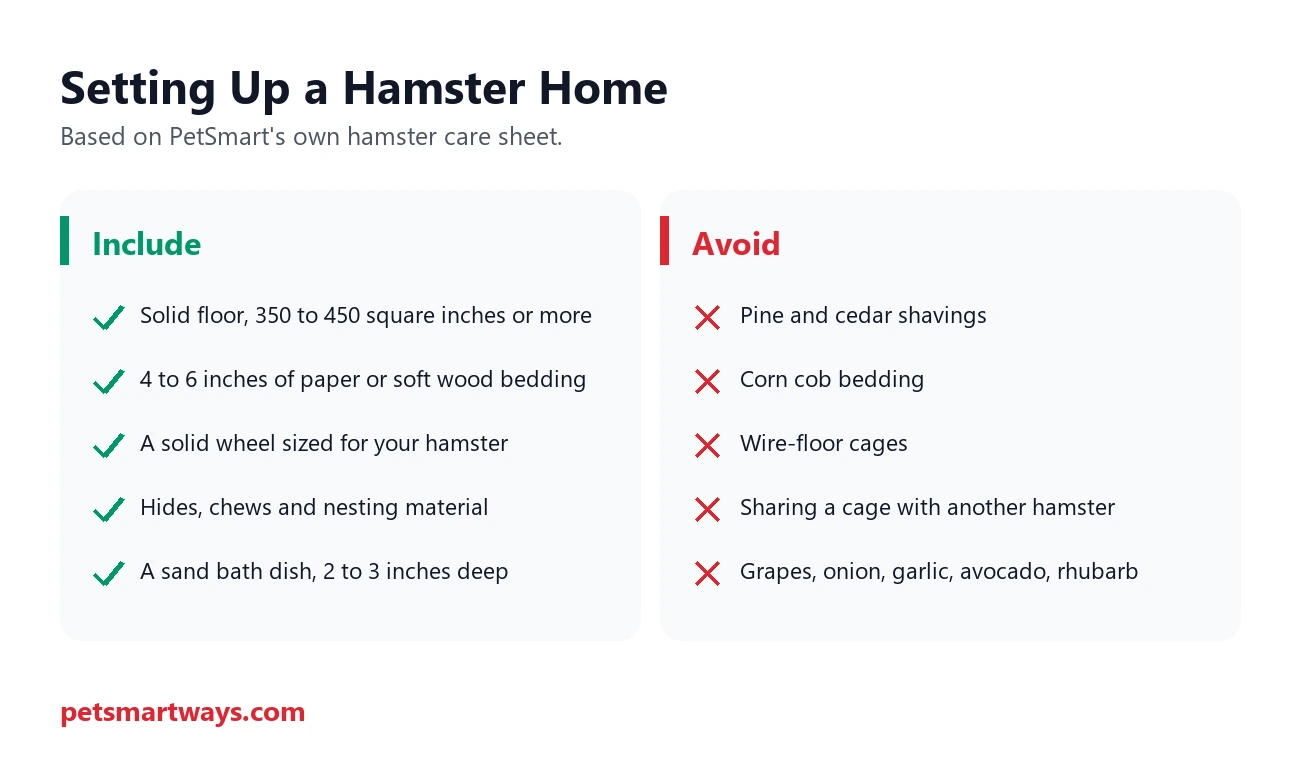
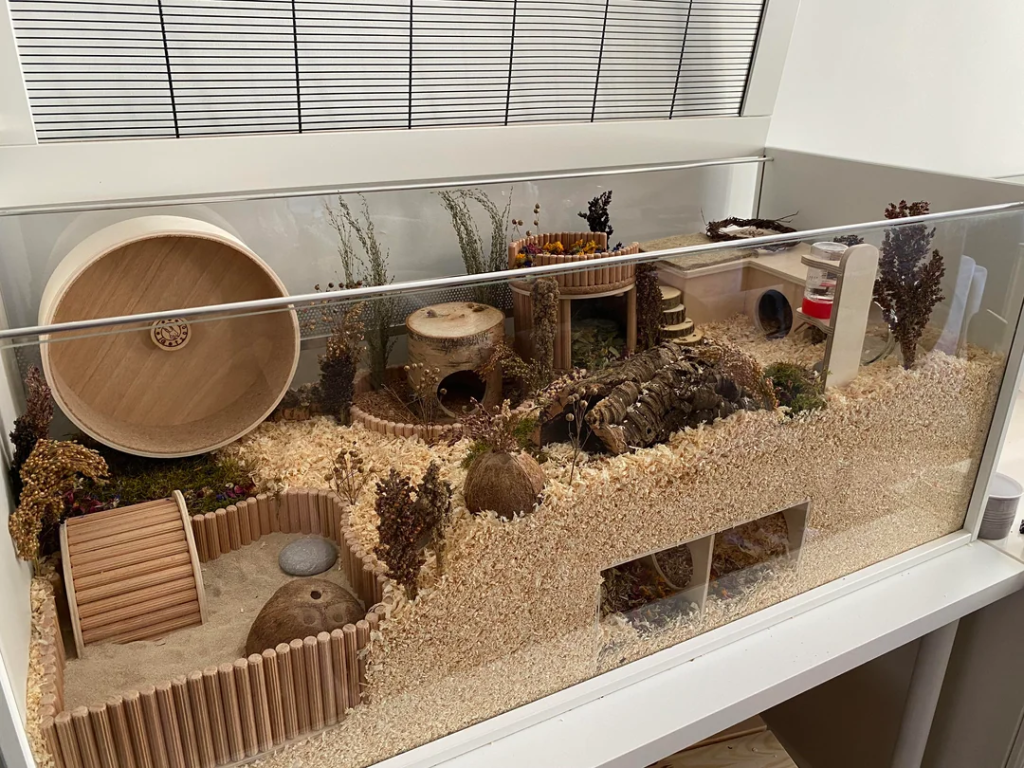
Hamsters love to dig, so add 4 to 6 inches of shredded paper or soft wood bedding. Avoid pine, cedar and corn cob bedding.
Add a wheel, hides, chews and nesting material. Hamsters clean themselves in sand, so include a small dish with 2 to 3 inches of bathing sand instead of giving water baths.
A glass tank or large bin cage with a secure mesh lid works well. If you choose wire, check that the bar gaps are too narrow for a dwarf to squeeze through.
Choosing the Right Wheel
A wheel is a hamster’s main exercise, and many run for miles each night. The wrong size can hurt its back over time.
| Hamster | Wheel size |
|---|---|
| Syrian | At least 10 to 12 inches across |
| Dwarf | At least 8 inches across |
Watch your hamster run. If its back arches upward, the wheel is too small, and you should size up.
Pick a solid running surface rather than wire rungs, which can trap tiny feet. A quiet spinner wheel helps if the habitat is near a bedroom.
Where to Put the Habitat
Hamsters sleep through the day and wake in the evening. Place the habitat somewhere calm during daylight hours.
- Away from direct sun, heaters and drafts
- In a room that stays around 65 to 75 degrees
- Out of reach of cats and dogs
- Not in a light sleeper’s bedroom, since wheels run all night
Setup Costs
| Item | What to budget |
|---|---|
| Habitat of 450 square inches or more | $60 to $150 |
| Bedding | $15 to $25 a month |
| Solid wheel | $15 to $35 |
| Hides, chews and toys | $20 to $40 |
| Bathing sand and dish | $10 to $15 |
| Pellet food | $8 to $15 |
| Water bottle and food dish | $10 to $20 |
All told, expect to spend $150 to $300 before you bring a hamster home. The cage is where spending more pays off most.
Earn points on bedding and food with Treats Rewards, since those are the costs that keep coming back.
Feeding Your Hamster
A pelleted hamster diet is the most complete option, according to PetSmart. Keep food available at all times, since hamsters eat throughout their active hours.
Treats should be small and low in sugar, like a bit of carrot or cucumber. Never give grapes, onion, garlic, avocado or rhubarb, which are toxic to hamsters.
Fresh water must always be available from a bottle or heavy dish. Check it daily, as bottles can jam.
Cleaning Routine
Spot clean soiled bedding and leftover fresh food every day or two. Hamsters usually pick one corner as a toilet, which makes this quick.
PetSmart recommends a full bedding change and deep clean every two weeks. Leave a handful of clean old bedding behind so the space still smells familiar.
Picking a Healthy Hamster in Store
Take a few minutes to watch before choosing. A healthy hamster is curious and moves easily once awake.
- Clear, bright eyes and a clean nose
- A full, glossy coat without bald patches
- A clean, dry tail area
- Front teeth that look even and not overgrown
- Steady walking and climbing
Ask the associate how old the hamster is and whether it has been handled. Younger, handled hamsters usually tame faster.
Safe Time Outside the Habitat
Hamsters enjoy exploring, but they’re fast and fond of small gaps. A secure playpen on the floor is safer than letting one roam a room.
Sit inside the pen with treats and let your hamster climb onto you. Always supervise, and keep other pets out of the room.
The First Month at Home
Have the habitat fully set up before you bring your hamster home. The less time it spends in a travel box, the better.
- Give it two or three quiet days to settle before handling
- Talk softly near the cage so it learns your voice
- Offer treats from your open palm inside the habitat
- Scoop it up gently with both hands once it climbs on willingly
- Keep early handling sessions short and low to the ground
PetSmart suggests watching any new pet closely for 30 days. It also recommends a vet visit within 14 days of purchase to set up care.
Health Signs to Watch
Hamsters hide illness, so small changes matter. PetSmart lists these as reasons to call a small animal vet.
- Cloudy, sunken or swollen eyes
- Wheezing, sneezing or discharge from the eyes, nose or mouth
- Overgrown front teeth or drooling
- Not eating or drinking normally
- Bare patches in the fur or sores on the feet
- Diarrhea or a wet, dirty tail area
A wet, messy tail area can signal wet tail, a serious illness in young hamsters. See a vet the same day if you spot it.
How Hamsters Compare to Other Small Pets
If a hamster’s short life or night schedule doesn’t fit, PetSmart sells several other small pets. Prices below are PetSmart’s regular listed prices.
| Pet | PetSmart price | Good to know |
|---|---|---|
| Fancy mouse | $7.99 | Social and best in same-sex groups |
| Fancy rat | $11.99 | Smart, friendly and enjoys handling |
| Gerbil | $21.99 | Active during the day and likes company |
| Hamster | $23.99 to $25.99 | Solitary and active at night |
| Guinea pig | $59.99 to $89.99 | Lives longer and needs a friend |
| Chinchilla | $199.99 to $249.99 | Long-lived, needs a cool room |
Rats and gerbils often suit families who want a pet that’s awake and interactive during the day.
Are Hamsters a Good First Pet?
Hamsters are small, quiet during the day and cheap to buy. They suit older children and adults who enjoy evening activity.
| Good fit if | Think twice if |
|---|---|
| You’re often home in the evening | Light sleepers share the room |
| You want a low-cost pet | You want a pet that loves cuddling |
| A child over 8 will help with care | Young kids will do most of the handling |
| You have space for a large habitat | Space is very tight |
A two-year lifespan is short, which can be hard for children. It’s worth talking about before you buy.
PetSmart’s 14-day promise lets you return or replace a hamster that becomes ill, as our live pet return guide explains. To compare other options, see our small animals guide and guinea pig price guide.
Hamster Questions
Can two dwarf hamsters live together?
PetSmart says no. Hamsters that share a cage are likely to fight and may be seriously hurt, regardless of gender.
How long do PetSmart hamsters live?
About two years on average. Good diet, a large habitat and prompt vet care help.
Do hamsters bite?
They can, usually when startled awake or grabbed from above. Let your hamster wake up fully and scoop it from below to avoid nips.
Can I adopt a hamster instead?
Yes, some PetSmart Charities adoption centers include small animals. Our adoption guide explains how to find one.